

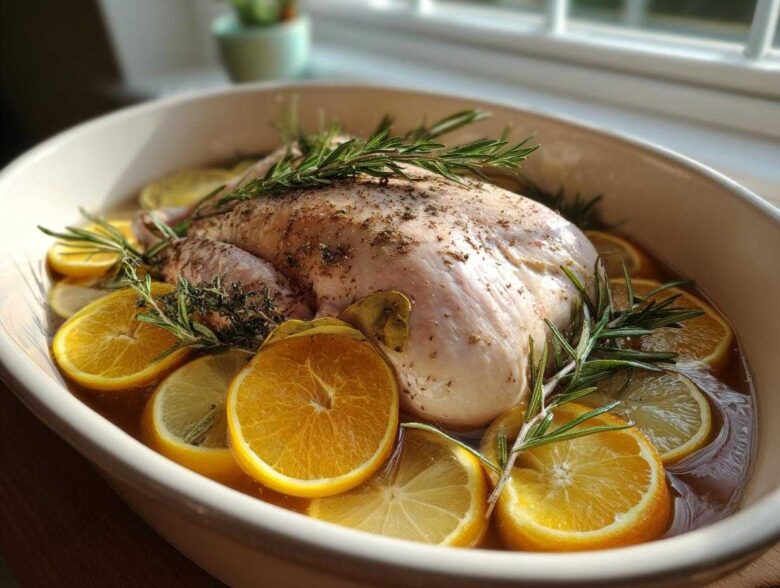
If you’ve ever spent hours roasting a gorgeous bird only to carve into dry, sad slices of meat, trust me, I’ve been there! Don’t let that happen this holiday season. We are going to change the game completely. The secret isn’t in the oven temperature or the basting schedule; it’s what happens long before the bird even sees the heat. I’ve used this incredibly simple wet turkey brine method for years—since my very first Thanksgiving when I panicked and oversalted the gravy—and it is foolproof for moisture and flavor.
This quick solution infuses the meat completely, guaranteeing you get that juicy turkey recipe result everyone dreams about. It’s honestly the single most important step for a perfect roast. For more general cooking inspiration, feel free to check out my latest updates over at the blog. Follow me, and I’ll show you exactly how to mix this savory solution and turn your centerpiece from basic to absolutely legendary.
Why This Wet Turkey Brine is Your Secret to a Juicy Turkey
There is such a difference between just seasoning the outside of your bird and actually seasoning *through* it, you know? When you create this lovely saltwater bath, the salt works magic, breaking down tough muscle fibers slightly. This means better water retention, which is the key to superior roast turkey moisture retention, especially for those lean turkey breast pieces.
My simple wet turkey brine also guarantees salt penetrates deep under the skin evenly. That means every single bite is savory. We don’t just want a pretty bird on the platter; we want incredible flavor from the first slice to the last leftover bite. You will absolutely see the difference in the juiciness after trying this method. For more details on the final cooking phase, check out how to cook a perfect turkey after brining.
Wet Brine vs. Dry Brine: A Quick Comparison for Your Turkey Brine
Okay, so there are two main schools of thought here. Dry brining is fast and great for skin crisping because it just uses dry rubs. But honestly? For beginner cooks or anyone terrified of dry meat, this wet turkey brine method wins every time. It’s foolproof for hydration and truly seasons the meat internally. You can’t mess up the moisture this way!
The Best Turkey Brine Ingredients for Flavor Infusion
When we talk about the best turkey brine ingredients, we aren’t just grabbing whatever’s in the pantry. Salt and sugar are your heavy lifters here, but the aromatics are what make this mixture smell like a cozy holiday kitchen! I tried one year just using plain water and salt, and honestly, the turkey tasted… fine. That’s not what we’re aiming for! We want flavor punched right into that meat.
This formula is what I call my foundational citrus herb turkey brine. It’s balanced, it’s powerful, and it ensures incredible flavor penetration. We use both salt and sugar—don’t skip the sugar! It helps with browning later, even though we are rinsing it off. This is the base for a truly memorable flavor profile. For more complex versions, you can always check out my citrus herb turkey brine guide later on.
Here are the specific supplies you’ll need for our homemade turkey soak solution:
- 1 cup kosher salt (Trust me, don’t use iodized table salt here!)
- 1 cup packed brown sugar
- 1 gallon cold water, divided
- 1 whole turkey (12-14 lbs)
- 1 orange, halved
- 1 lemon, halved
- 4 sprigs fresh rosemary
- 6 sprigs fresh thyme
- 2 tablespoons black peppercorns
Ingredient Clarity for Your Homemade Turkey Soak Solution
Listen closely, because the type of salt matters hugely here. You absolutely must use kosher salt. Table salt is much finer and packs differently, which means you’ll end up with way too much salt in the final solution, potentially ruining your bird! Also, notice how I specified cold water, divided. We heat up just a small amount of water initially to dissolve the solids, but then you have to use tons of ice or very cold water to bring the temperature down fast before the turkey goes in. Keeping that liquid cold is essential for food safety and texture; we are not cooking the turkey during the brine!
How to Prepare the Ultimate Easy Wet Turkey Brine
Okay, now for the fun part: actually mixing up this amazing turkey brine solution! This process is super straightforward, but the payoff is huge. We need to get that salt and sugar completely dissolved first, and then we deal with bringing the temperature way down before we can introduce our beautiful bird to the bath. I always do this the night before I plan to brine so the solution has time to chill in the fridge properly.
If you’re looking for a straightforward tutorial that walks you through all these steps without confusion, I have a full video guide on the easy poultry brining guide section of the site!
Step 1: Dissolving the Turkey Brine Base
Grab a large stockpot—big enough to fit your turkey later, or at least big enough to hold a good amount of liquid. You’re going to start by combining just 4 cups of your total water with the kosher salt and brown sugar. Put this on medium heat and stir it constantly until you see every single grain of salt and sugar disappear into the water. Don’t stop stirring until it’s totally clear; that’s important!
Step 2: Cooling and Flavoring Your Turkey Brine
This is where we prevent any accidental cooking of the turkey! Once the base is dissolved and off the heat, you need to add the rest of your cold water or toss in a giant bag of ice to drop that temperature fast. Seriously, you want this liquid refrigerator-cold before the turkey meets it. When it’s chilled down, now you drop in all those wonderful aromatics: your halved orange and lemon, the rosemary, the thyme, and those peppercorns. Give it a quick stir, then we move straight to submerging the bird!
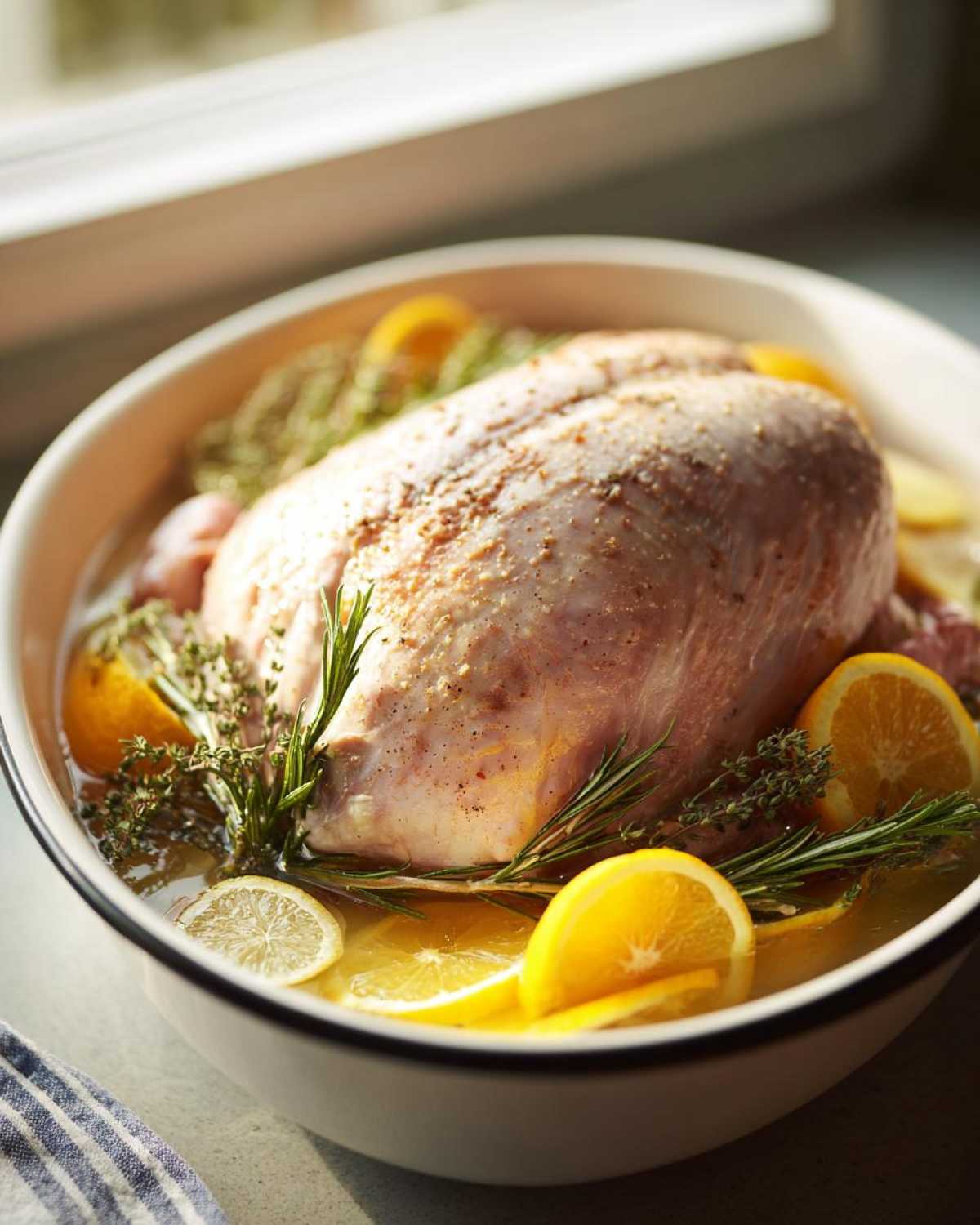
Essential Turkey Brining Timing Chart for Perfect Results
Timing is everything when it comes to your turkey brine; you can’t just guess! I know Thanksgiving prep is hectic, but you really need to pay attention to these timelines to ensure perfect seasoning without turning the meat into pork. Over-brining is just as bad as under-brining—it can make the texture too soft or overly salty. You want that sweet spot where the meat is perfectly seasoned throughout, and that’s what this brining timing chart helps you nail down.
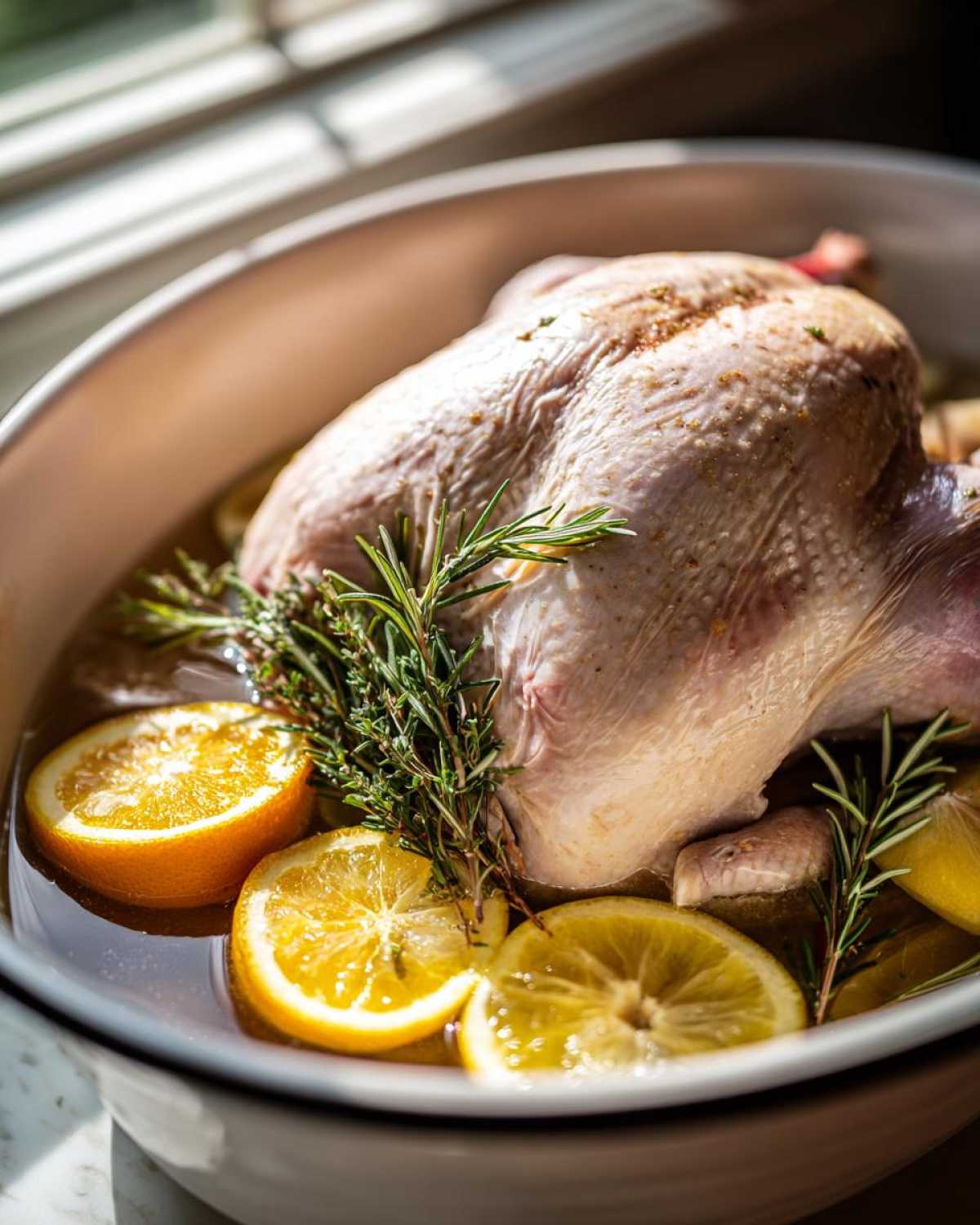
For a standard 12 to 14-pound bird, which is what most of us cook, 18 hours is usually my sweet spot. But if you have a smaller 10-pounder, you might pull it out around 14 hours. If you are lucky enough to have a giant 20-pound turkey, you can push that time closer to 24 hours, but never, ever go past that on a wet brine! For more general holiday countdown tips, check out my guide on Thanksgiving turkey prep.
Rinsing and Drying After Your Turkey Brine Soak
Once your time is up, pulling that bird out of the brining container feels great, but we are not done yet! A lot of people skip this next part, and that’s why their skin ends up pale and rubbery instead of golden and crisp. You have to rinse that turkey meticulously, inside and out, under cold running water. I usually stand at the sink for a solid five minutes just flushing out all the surface salt and sugar residue.
But the absolute most important thing—and I mean this—is drying. You must pat the entire turkey until it feels bone-dry, using tons of paper towels. Any moisture left on the skin will turn into steam, and steam equals flabby skin. After you’ve patted it down, put it on a rack set over a pan and let it chill uncovered in the fridge for at least four hours. Letting it air-dry overnight is even better! This drying period is what sets you up for that picture-perfect roast turkey.
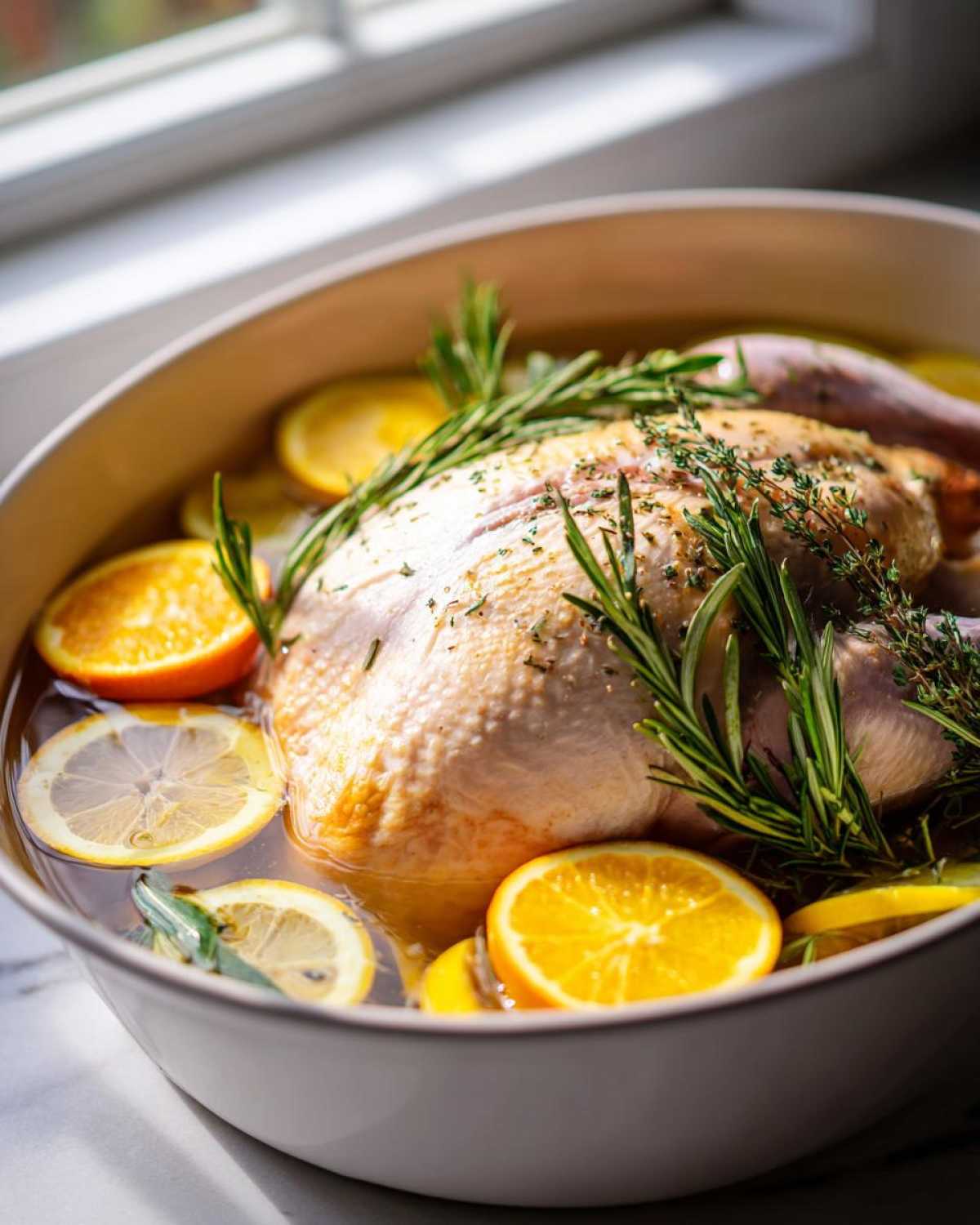
Tips for Success When Using a Turkey Brine
So, you’ve mastered the brine, rinsed off the excess, and patted the bird dry until your arms are tired—congratulations! Now, let’s talk about the container and the final prep touches to nail that roast turkey moisture retention. First off, your container choice makes a difference! You absolutely need something non-reactive. That means no regular steel pots unless they’re completely enameled and unchipped. I always rely on a huge, food-grade plastic bucket—they’re cheap and guarantee the brine won’t interact with the metal.
Remember that crucial drying step I mentioned? Don’t rush it! That time the turkey spends sitting open in the fridge lets the skin firm up beautifully. If you skip that air-drying time, any water left on the skin will make the fat render slowly, and guess what? Soggy skin. Nobody wants a soggy bird when they’re aiming for that golden, crispy finish on their holiday roast bird tips centerpiec. For more advanced roasting tricks, check out my tips here: holiday roast bird tips.
Variations on the Classic Citrus Herb Turkey Brine
Once you nail down this essential wet turkey brine, you can start playing around a little bit! Even though I stick to the classic orange and rosemary because I love that bright, earthy smell, there are tons of ways to customize the flavor profile to match whatever sides you’re serving. Think of the base recipe—salt, sugar, aromatics—as your starting point, and then let’s get creative!
If you’re looking for something a little spicier, try swapping out half the peppercorns for a teaspoon of red pepper flakes. It gives a fantastic little warmth on the back end that cuts through the richness of the turkey fat. For something a bit warmer and deeper, which is really nice if you are making a smoked turkey brine recipe instead of roasting, add a tablespoon of whole coriander seeds when you boil the liquid. You won’t believe how complex the flavor gets!
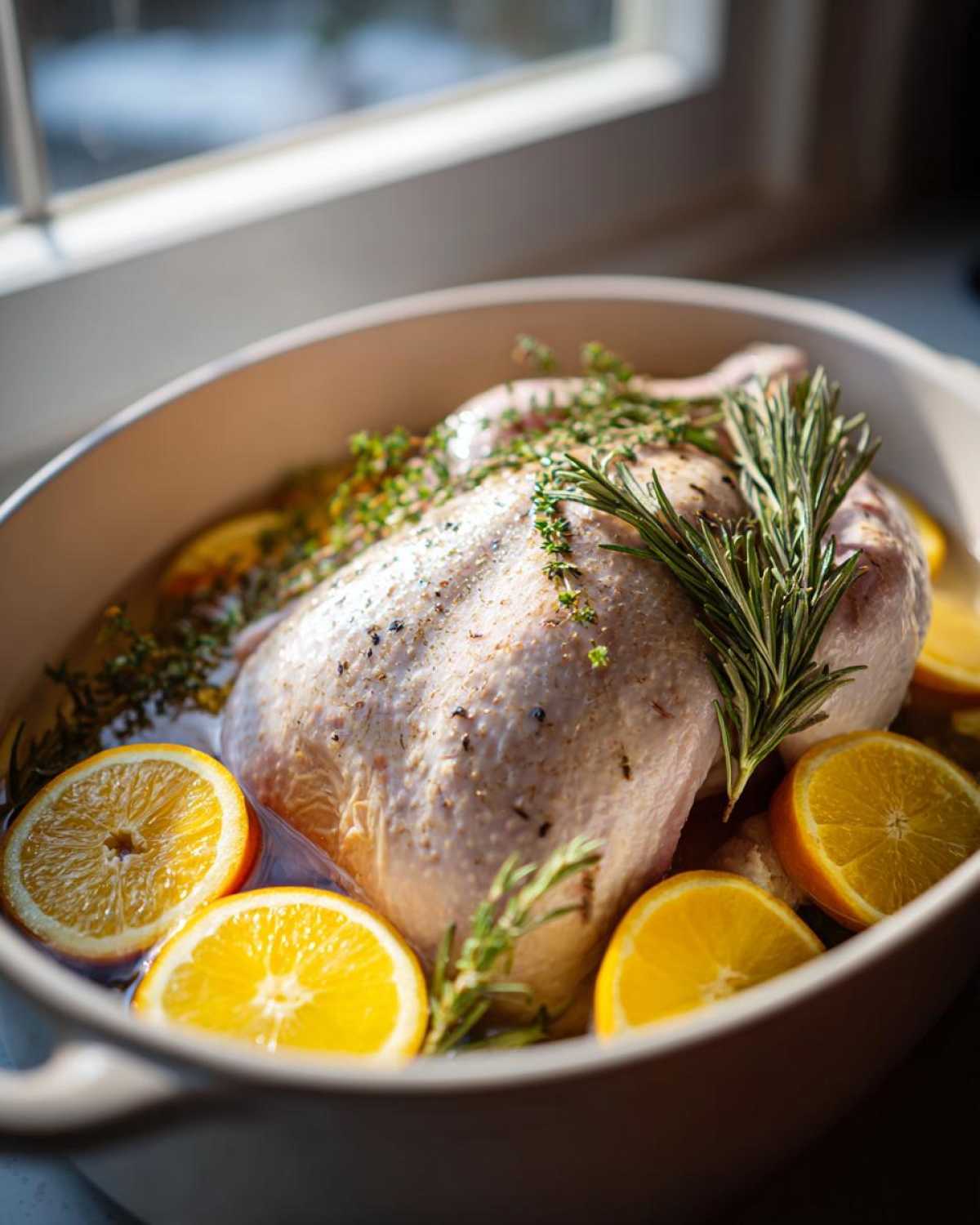
Don’t forget that if you are just doing a smaller turkey breast brine method, you can cut down the recipe significantly, but keep the ratios the same. A smaller volume of liquid means less brining time, so always recalculate your soak time accordingly. Experimenting with your citrus herb turkey brine is part of the fun, and you can find other ideas for adding depth similar to a flavorful turkey marinade in my other post here: flavorful turkey marinade. Just remember: always stick to kosher salt and prioritize that cold liquid!
Serving Suggestions for Your Flavorful Turkey Roast Bird
Now that you’ve got a perfectly moist and seasoned thanksgiving dinner centerpiece, we need to make sure the plates surrounding it are just as amazing! Because we used that citrus and herb turkey brine base, you want sides that complement that brightness rather than fight it. Heavy, creamy sides are great, but I suggest something with a little acid or earthiness to really cut through the richness of the dark meat.
My go-to is always roasted root vegetables—carrots, parsnips, maybe some sweet potatoes—tossed simply with olive oil, salt, and maybe a tiny splash of balsamic vinegar at the end. If you need a stellar recipe for that, check out my roasted root vegetable medley recipe; it takes hardly any effort! A simple green bean almondine or a light mushroom stuffing works beautifully too. You’ve done the hard work getting that bird perfect; let the sides shine right alongside it!
Storage and Reheating Instructions for Your Juicy Turkey Recipes
The best part about a perfectly brined bird is that the flavor improvement lasts! Don’t let those glorious leftovers dry out, though. Store any leftover turkey right away in airtight containers in the fridge—no more than four days is my rule. When you’re ready to reheat, the secret is adding back a little moisture right into the container.
I always pour a tablespoon or two of chicken broth or even just water over the slices before I microwave them, or if I’m planning a big reheat, I use the oven wrapped tightly in foil. You can see how I transform leftovers into sandwiches in my next post about using up that great meat here: turkey cranberry panini leftover lunch idea. Keep that brine moisture locked in!
Frequently Asked Questions About Turkey Brining
I always get a flood of questions right before the holidays, and that’s totally fair! Brining sounds scary, but once you see how simple it is, you’ll never go back. These are the things I hear most often as people are preparing for their Thanksgiving turkey prep. Don’t worry if you’re attempting this for the first time; we’re going to cover all the bases so you can manage a huge, perfect bird with total calm. For even more basic troubleshooting, pop over to my guide on beginner turkey brining.
Can I use this turkey brine recipe for a turkey breast?
Oh, absolutely! Many people prefer cooking just the breast, and this recipe works perfectly for that using the turkey breast brine method. The main difference is that you need way less liquid, and you need to adjust your timing drastically. For a bone-in turkey breast, you can usually cut the brining time down to just 6 to 10 hours, depending on how thick it is. Too long, and the meat gets that slightly strange, soft texture. Always make sure the breast is completely submerged, even if you have to use a smaller container and less of the liquid base!
What is the ideal sodium level in a turkey brine?
This is a fantastic and important safety question! The golden ratio I preach for a good turkey brine is about 1 cup of kosher salt per gallon of water, alongside about 1 cup of sugar for balance. If you stick to those ratios for a 12 to 14-pound bird, you should not have an overly salty result, especially since you rinse it off so well afterward! If you are nervous about the sodium content—maybe you want a lighter overall seasoning—start by reducing the salt by about 2 tablespoons. That’s usually the maximum safe adjustment before you risk not getting proper moisture retention.
Do I have to use citrus in my turkey brine?
Not technically, no, but I really encourage it! The citrus adds a wonderful brightness that cuts through the richness of the meat so your final dish doesn’t taste heavy or too salty. If you have an allergy or just truly hate oranges, you can leave them out. However, if you ditch the citrus, you might want to add something else for complexity in the savory turkey preparation. Maybe throw in half an onion or a few bay leaves to make sure you don’t end up with just a salty water flavor.
Can I leave the turkey in the brine for 36 hours?
Please don’t! I know it’s tempting to prep ahead, but for this wet turkey brine recipe, 24 hours is the absolute max for a 14-pound bird. Anything past that, and you risk starting to break down the muscle fibers too much. Once the salt has fully penetrated, leaving it submerged longer doesn’t make it juicier; it makes it mushy. For longer prep times, that’s when you need to switch to a dry brine; it’s safer for those super-long marinades and achieves great results for anyone prepping their holiday cooking secrets early!
Estimated Nutritional Data for Brined Turkey Meat
Okay, so we know this turkey brine makes your bird fantastically juicy and flavorful, but I always get asked about the nutrition aspect since we are using a cup of salt and a cup of brown sugar in the mix! Remember that most of the salt and sugar washes right off when you rinse the bird, but some of it absolutely soaks in, which is how the meat gets seasoned.
The figures below represent an estimate based on an average 4-ounce serving of the cooked meat from the recipe. Please remember these are just estimates for juicy turkey recipes because the final nutrition depends wildly on your roasting method, how much fat you leave on, and which brand of ingredients you use. If you need more detail on how these numbers are calculated or general dietary caveats, you can check out the fine print over at the disclaimer page.
- Serving Size: 4 oz cooked meat
- Calories: 180
- Sugar: 2g
- Sodium: 1100mg (Yes, that’s higher than plain turkey, but it’s spread across a whole bird!)
- Fat: 5g
- Saturated Fat: 1.5g
- Unsaturated Fat: 3.5g
- Trans Fat: 0g
- Carbohydrates: 3g
- Fiber: 0g
- Protein: 30g
- Cholesterol: 95mg
See? Even with the flavor infusion from the best turkey brine ingredients, you still end up with a high-protein meal that’s relatively low in fat. It’s amazing what nature does when you help it retain its own juices!
PrintUltimate Easy Wet Turkey Brine Recipe
Follow this simple wet turkey brine method to ensure your roast bird is juicy, moist, and flavorful for your holiday meal.
- Prep Time: 20 min
- Cook Time: 3 to 4 hours (roasting time varies)
- Total Time: 24 hours 20 min
- Yield: 1 turkey (serves 10-12)
- Category: Poultry
- Method: Wet Brining
- Cuisine: American
- Diet: Low Fat
Ingredients
- 1 cup kosher salt
- 1 cup packed brown sugar
- 1 gallon cold water, divided
- 1 whole turkey (12-14 lbs)
- 1 orange, halved
- 1 lemon, halved
- 4 sprigs fresh rosemary
- 6 sprigs fresh thyme
- 2 tablespoons black peppercorns
Instructions
- In a large stockpot, combine 4 cups of water, the kosher salt, and brown sugar. Heat over medium heat, stirring until the salt and sugar fully dissolve. Remove from heat.
- Add 1 gallon of ice or cold water to the pot to cool the mixture quickly. You want the brine to be completely cold before adding the turkey.
- Place the turkey in a food-safe brining bag or a very large container.
- Add the orange halves, lemon halves, rosemary, thyme, and peppercorns to the liquid.
- Pour the cooled brine mixture over the turkey, ensuring it is fully submerged. Add more cold water if necessary to cover the bird completely.
- Seal the bag or cover the container and refrigerate for 12 to 24 hours. Do not brine for longer than 24 hours for a 14-pound bird.
- Remove the turkey from the brine. Discard the brine solution.
- Rinse the turkey thoroughly inside and out with cold running water. Pat the skin completely dry with paper towels. This drying step is crucial for crispy skin.
- Proceed with your preferred roasting method.
Notes
- Wet brining adds moisture and seasons the meat deeply. Dry brining uses only salt and seasonings rubbed directly onto the skin and requires less space in the refrigerator.
- Always use a non-reactive container, such as a food-grade plastic bucket or a large zip-top brining bag.
- After brining, allow the turkey to sit uncovered in the refrigerator for at least 4 hours before roasting to help dry the skin.
Nutrition
- Serving Size: 4 oz cooked meat
- Calories: 180
- Sugar: 2
- Sodium: 1100
- Fat: 5
- Saturated Fat: 1.5
- Unsaturated Fat: 3.5
- Trans Fat: 0
- Carbohydrates: 3
- Fiber: 0
- Protein: 30
- Cholesterol: 95
