

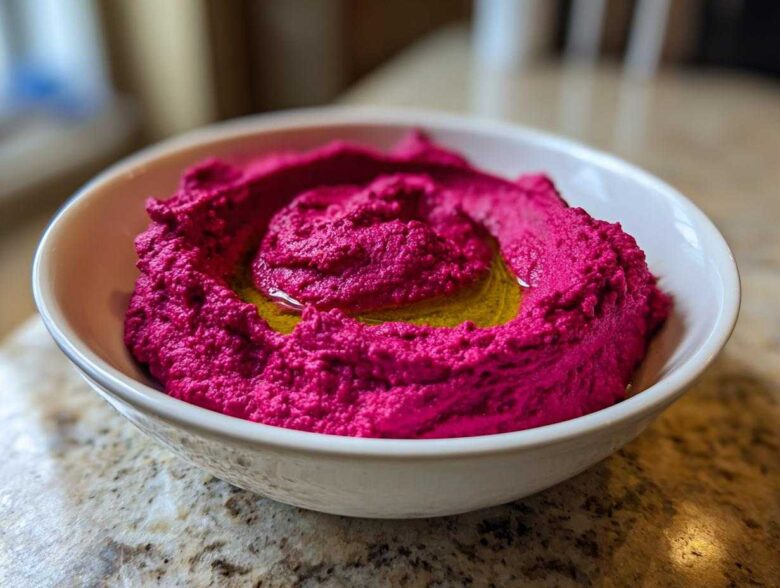
Oh my gosh, you have to stop making that boring, pale hummus! We’re talking about food that needs to POP on the plate, right? Nothing—and I mean *nothing*—brings the drama like that incredible, deep magenta color you get from fresh beets. Seriously, I’ve finally nailed the recipe for Vegan Creamy Roasted Beet Hummus, and it’s smoother than silk. I used to think adding vegetables made hummus grainy, but I was doing it all wrong until I figured out the roasting time.
This isn’t just a dip; it’s a centerpiece! I brought this to my cousin’s engagement party, and people swore it had some secret fancy ingredient. Nope! It just takes a little love for the roots. This recipe gives you that stunning, vibrant pink color and the creamiest texture you can imagine, all while keeping it completely plant-based. Get ready for your snack platter game to go sky-high!
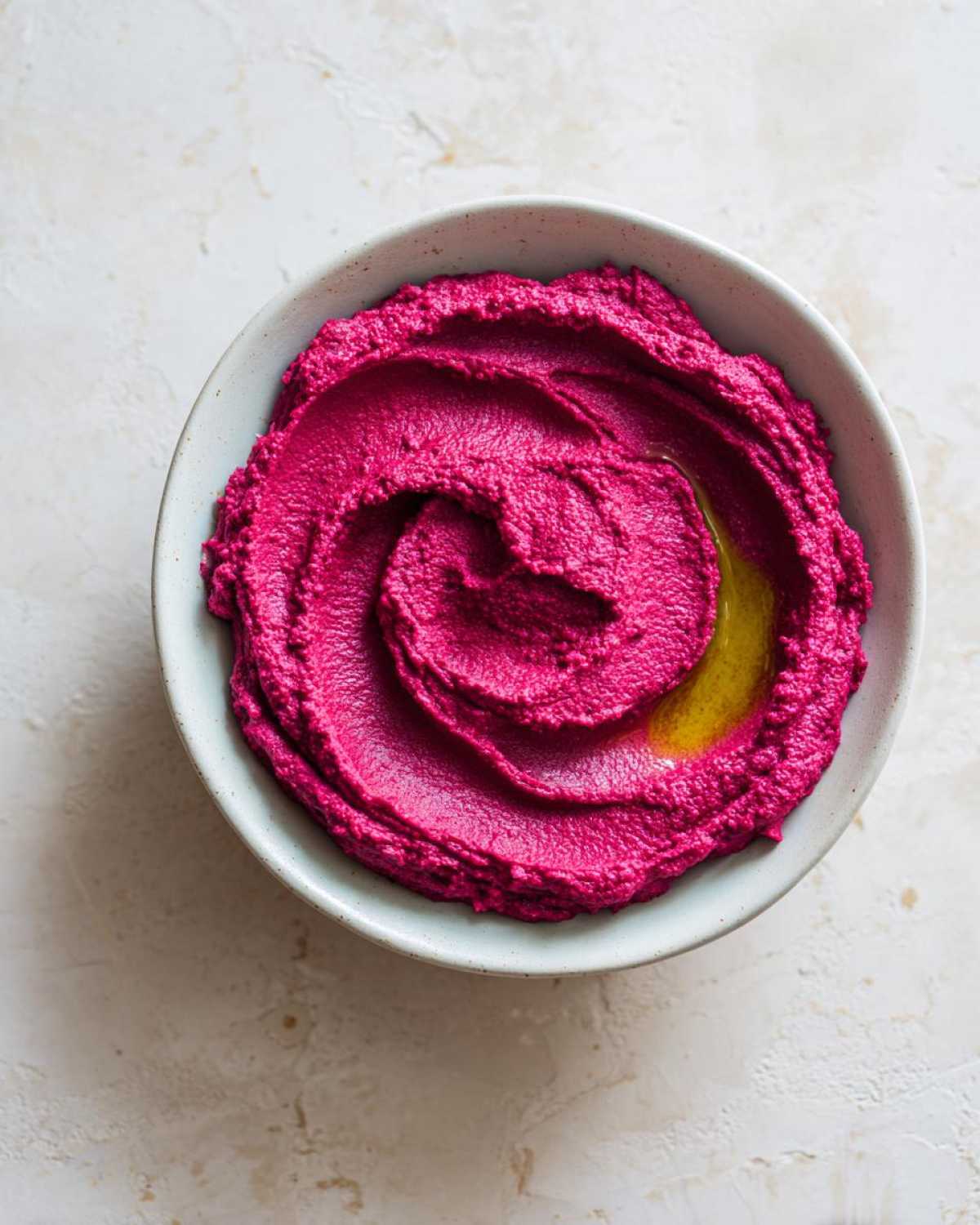
Why This Vegan Creamy Roasted Beet Hummus Recipe Works
This isn’t rocket science, but there are a few little tricks I learned the hard way that make this spread absolutely spectacular. When people ask me how I get it so smooth, I tell them it’s all about respecting the ingredients and trusting the food processor! It’s taking a simple legume and making it shine.
We keep things plant-based, of course, but the real magic is how we boost both texture and color without any weird additives. I even tried linking to some of my other simple appetizer ideas over at my main blog page if you need more snacking inspiration!
Achieving the Perfect Creamy Vegan Hummus Texture
- The tahini has to be absolutely stirred before you measure it. If you don’t stir the jar, you’re mostly getting the oil on top, and that throws everything off the balance.
- Processing time is crucial! You can’t rush this. We process until our arms ache just a little bit, scraping down the sides constantly.
- The secret weapon for soupiness is using cold water slowly. It shocks the mixture and helps emulsify everything into that gorgeous, silky smooth finish.
The Flavor Profile of Vegan Creamy Roasted Beet Hummus
Roasting the beets does two things: it caramelizes their natural sugars, making them sweet, and it softens them entirely. This means you get that incredible earthy depth without any of the tough texture you get from using raw beets. It balances so nicely with the tart lemon and sharp garlic!
When you see that incredible color, you know you’ve nailed the Vibrant Pink Hummus Recipe. That shade is your promise that this Vegan Creamy Roasted Beet Hummus will be the star of your appetizer spread, hands down.
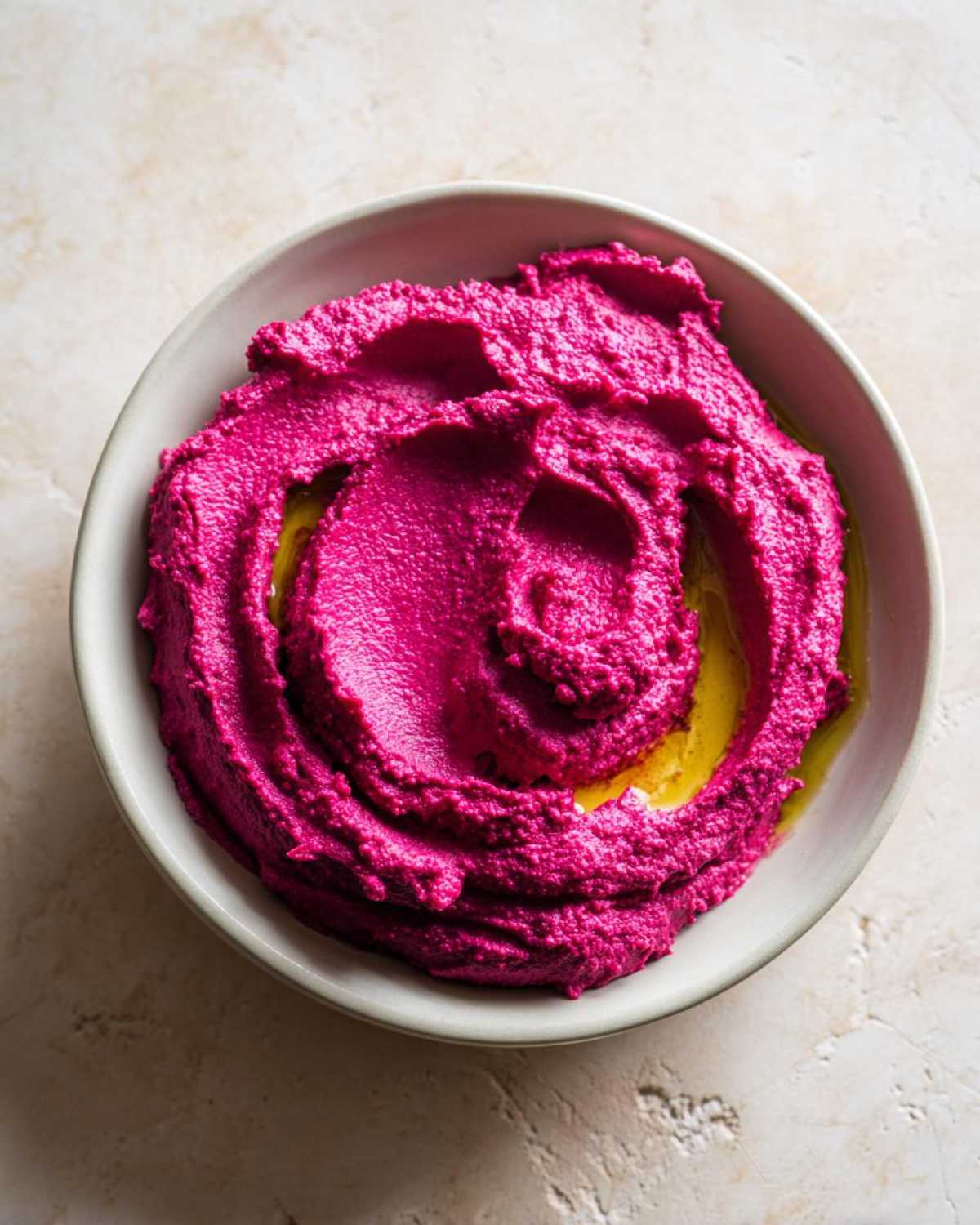
Essential Ingredients for Vegan Creamy Roasted Beet Hummus
Okay, listen up, because ingredient quality really matters when you’re trying to get that deep flavor and smooth result. I always lay everything out before I even think about turning on the food processor. Remember, we’re skipping the dairy, so every plant-based component has to pull its weight!
Here’s what you need chilling on the counter:
- Two medium beets—you want about a pound total. Don’t skimp here; this is where the color comes from!
- One (15-ounce) can of chickpeas. I’m serious: rinse them well. If you have the patience, peeling them—yes, peeling the chickpeas—it makes a world of difference for that silky texture.
- A full 1/4 cup of tahini. Don’t use an old, separated jar!
- Two tablespoons of fresh, bright lemon juice. Bottle juice just tastes flat, trust me on this one.
- Two cloves of garlic, ready to add some punch!
- Two tablespoons of good olive oil, and then extra just for drizzling at the end.
- Simple salt and pepper to taste.
- And finally, cold water, but only 2 to 4 tablespoons—we add this slowly at the end.
Ingredient Notes and Substitutions for Beetroot Hummus
My biggest piece of advice here is about the tahini. If you need another recipe to see what good tahini looks like, you can check out how I use it in my tahini maple butter spread. It should pour relatively easily after a good stir.
Also, if the garlic seems too intense for you, an absolute pro move for a milder, richer flavor is to toss those two cloves in foil with the beets when they roast! They’ll get beautifully soft and sweet. And yes, if your chickpeas are a bit dry, you can absolutely swap out the plain water for a bit of that chickpea canning liquid—aquafaba—for an extra level of creamy emulsification!
Step-by-Step: How to Make Smooth Beet Hummus
This is where the magic happens, and I promise you, a little patience during the roasting phase pays off huge dividends later! If you followed my ingredient tips, gathering everything shouldn’t have taken long. Now we focus on that beautiful color and achieving that perfect silky result we’re aiming for in this How to Make Smooth Beet Hummus tutorial. Before we even touch the food processor, those beets need some serious oven time! For extra inspiration on process flow, check out my guide on roasted red pepper hummus for a similar approach.
Roasting the Beets for Optimal Flavor in Your Vegan Creamy Roasted Beet Hummus
First things first: preheat that oven to 400°F (200°C). Don’t try to steam these; we want slow, deep caramelization. Take your whole, unpeeled beets—yes, whole!—and wrap them up super tightly in aluminum foil. They need about 45 to maybe 60 minutes in there. You’ll know they’re done when you can pierce them with a fork with zero struggle. Once they feel tender, pull them out and let them cool down enough so you can handle them without burning yourself.
Now for the messy part! Here’s my non-negotiable tip: put on some disposable gloves before peeling! Seriously, save your hands from looking like you wrestled an octopus. The skin should rub right off. If it fights you, it needs five more minutes in the oven next time. Chop up that gorgeous flesh, and we’re ready for the blending stage of our Vegan Creamy Roasted Beet Hummus!
Blending for the Ultimate Creamy Vegan Hummus Recipes
Time to bring it all together! Toss the chopped roasted beets, rinsed chickpeas, tahini, lemon juice, garlic, olive oil, salt, and pepper into your food processor. Start blending, and once it looks like a chunky, beautiful mess, start dribbling in the cold water, just one tablespoon at a time. This slow addition is key for the texture in any of the Creamy Vegan Hummus Recipes I swear by.
Keep scraping down the sides! You need to push everything back toward those blades. You might stop at 2 tablespoons of water, or you might need 4—that depends on how wet your beets were. Blend until you can’t see any chickpea flakes left, and you have achieved that ultimate silky smooth consistency for your Vegan Creamy Roasted Beet Hummus. Taste it now! Does it need more salt? More zingy lemon? Adjust it while the machine is still running!
Tips for the Best Vegan Creamy Roasted Beet Hummus Presentation
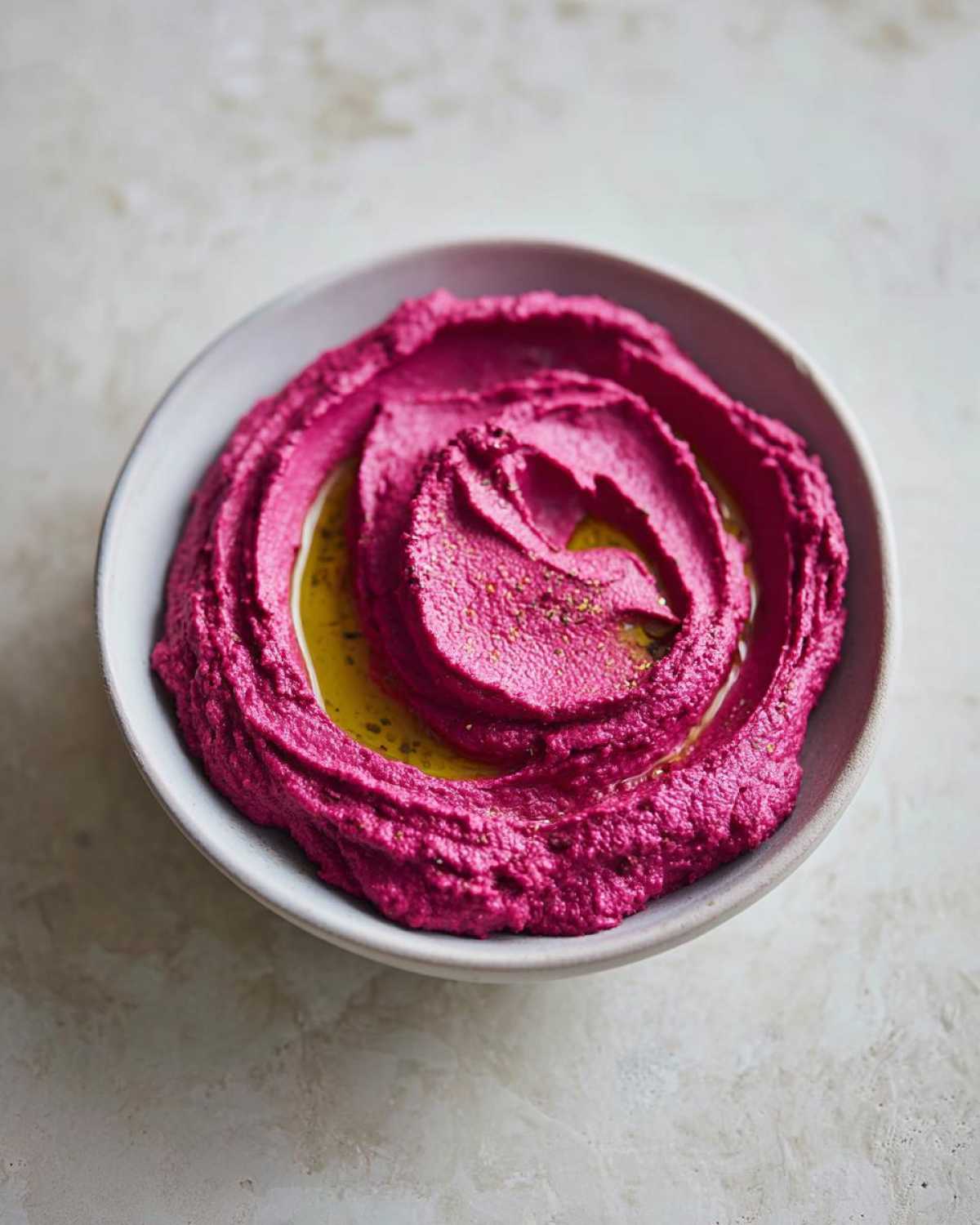
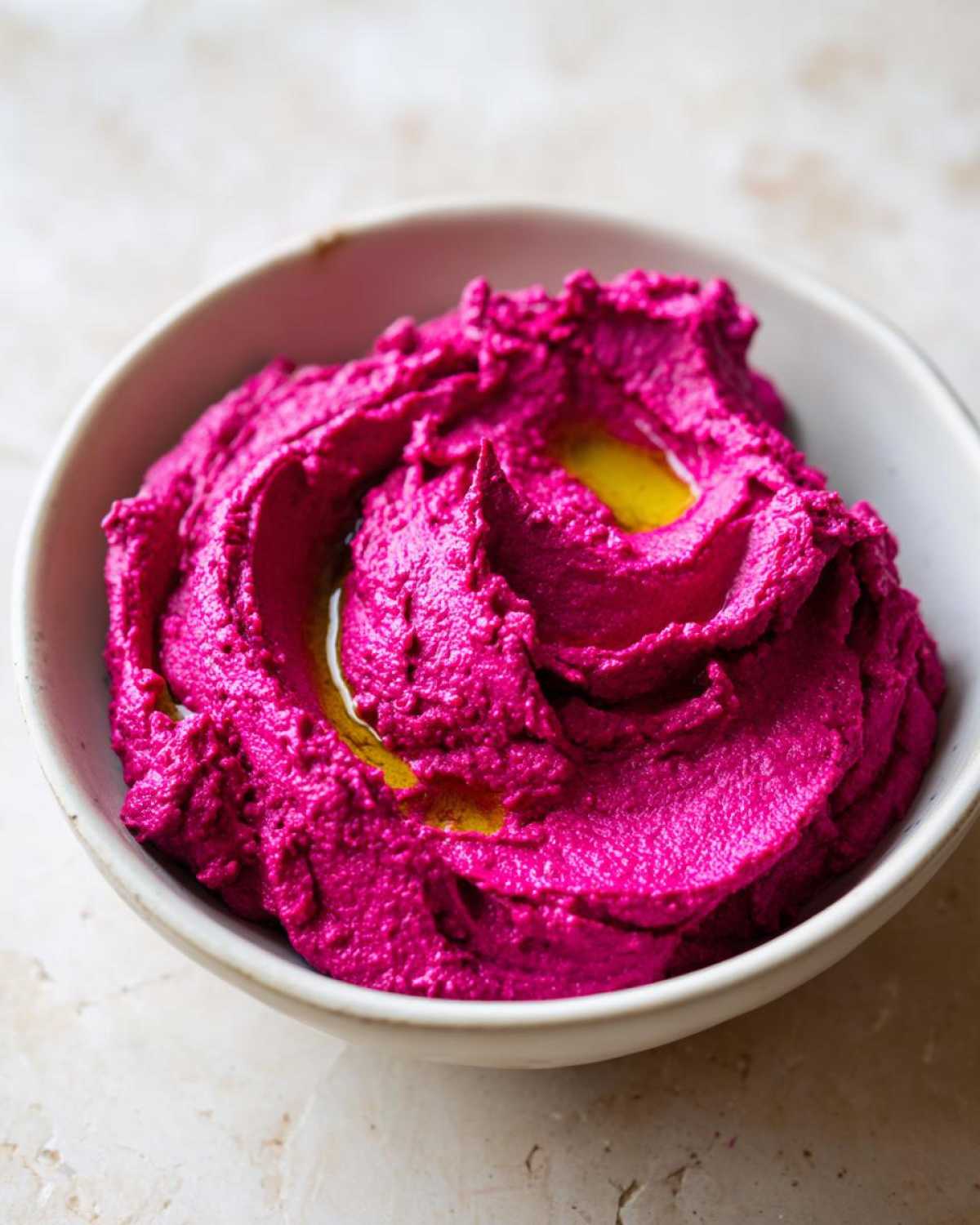
Honestly, the color of this dip is half the fun, so we absolutely cannot serve it looking flat! Once it’s smoothed out in the food processor, transfer it to your favorite serving dish. I always use a shallow bowl so I can really flair it out.
Here is my go-to trick for presentation: Take the back of a spoon and swirl the surface, making beautiful deep grooves all around the bowl. Then, hit the center with a drizzle of really good quality, grassy olive oil. That little bit of green against the bright pink? Perfection!
When I first brought this Vegan Creamy Roasted Beet Hummus to a potluck, people actually thought I had ordered it from an artisan deli. I got three requests for the recipe right then and there! For the finishing touch, I scatter a few toasted pumpkin seeds and some fresh chopped dill on top for texture and aroma. Check out some of my other entertaining ideas on my main blog page!
Serving Suggestions for Your Festive Beetroot Hummus
Now that you have this gorgeous, vibrant dip ready to go, the only question left is: what are you going to dip into it? This isn’t just a standard appetizer; it’s practically healthy enough to be a snack anytime, making it one of my favorite Healthy Vegan Appetizer Spreads to rely on.
Because of its robust, earthy flavor profile, it pairs beautifully with things that offer a salty crunch, which is why I encourage you to get creative with your dippers beyond just standard pita bread. If you’re looking for something crunchy that won’t distract from the beet flavor, I highly recommend pairing this with something simple.
For the absolute best crunch experience, this mixture is fantastic as the Best Vegan Dip for Gluten Free Crackers. A plain, barely seasoned cracker lets the beet flavor really shine through. Try sturdy carrot sticks, cucumber rounds, or even some toasted slices of baguette if you want something a bit fancier.
If you want to turn this into a real meal component, spread a thick layer on a warm tortilla instead of refried beans, or use it as a colorful replacement for mayo on sandwiches. It’s so versatile, you’ll want to make a giant bowl!
Storing and Reheating Your Bright Red Beet Hummus
Even though this beautiful dip disappears fast at parties, sometimes you need to make it ahead of time or save some for lunch the next day. Good news: This Bright Red Beet Hummus keeps really well!
The absolute best way to store it is in an airtight container. I usually use a glass container with a super tight-sealing lid. Why glass? Because I don’t want any residual plastic smell creeping into the fresh beet flavor!
If you make it a day ahead, that’s actually ideal, in my opinion. Hummus always tastes better the next day because those earthy beet notes, the lemon tang, and the sharp garlic all get a chance to mix and mingle properly overnight. You’ll notice the color might deepen just a tiny bit, too!
Now, about reheating it—here’s the thing: you really shouldn’t try to heat hummus up. Unlike soup, reheating it tends to break down the delicate emulsification we worked so hard to achieve. The tahini will separate, and you’ll end up with oily mush rather than smooth dip. Just pull it out of the fridge about 20 minutes before you plan on serving it, and it will come right back to that perfect, scoopable consistency.
It stays fresh and delicious in the refrigerator for a solid four to five days. If it starts looking dull or smells even slightly off—toss it! We want this to stay vibrant and fresh, not funky.
Troubleshooting Common Vegan Creamy Roasted Beet Hummus Issues
Even when we follow the steps perfectly, sometimes the food processor has other ideas, right? Don’t panic if your beautiful mixture isn’t quite where you want it. This dip is forgiving, I promise! We just need a little kitchen intuition to save the batch. This happens sometimes even when making the best Vegan Creamy Roasted Beet Hummus.
I’ve had batches that turned out way too stiff or ones that tasted overwhelmingly like the garden instead of a vibrant dip. Here’s what I do when things go sideways:
Hummus Is Too Thick and Won’t Process
This is usually because your beets were less watery than mine, or maybe you forgot that crucial last tablespoon of water. If the machine is just spinning and nothing is moving, shut it off immediately—don’t overheat the motor!
- The fix is easy: Add cold liquid, but you must do it slowly. Start with just one extra teaspoon of ice water.
- Process again. If it’s still stuck, another teaspoon. You want to avoid dumping too much in, or you’ll end up with soup, which is its own problem! Keep scraping down those dry edges until it starts catching again and smooths out.
Hummus Is Too Thin or Watery
Oops! You got too enthusiastic with the water dribbling in. This is less common when we’re aiming for the smoothest plant based chickpea dips, but it happens, especially if your tahini wasn’t thick enough to start.
- Don’t throw it out! The solution here is patience and some added substance.
- Add one tablespoon of your drained chickpeas at a time and keep processing until the mixture thickens back up to that lovely, spreadable consistency. You can also add an extra teaspoon of tahini if you have some on hand; that really helps bind things together without watering down the flavor.
The Flavor Is Too Earthy or Garlicky
Beets are naturally earthy, so if that flavor is overpowering the bright lemon and tahini notes, we need to adjust the accents.
- If it tastes too much like dirt, add more brightness! A squeeze—maybe half a teaspoon—of fresh lemon juice, and a tiny pinch more salt can often neutralize the earthiness.
- If the garlic is too sharp, you need more balance. Add a touch more olive oil or another very small scoop of tahini. If you have any leftover roasted beet flesh hiding away, blend that in too; it sweetens the whole thing up beautifully and knocks back the harsh garlic edge.
Frequently Asked Questions About Dairy Free Roasted Vegetable Dip
I get so many messages asking variations on this recipe, which is great! It means you guys are excited to make this stunning dip. Some questions pop up all the time, especially around the initial steps. Since this is a totally Dairy Free Roasted Vegetable Dip, the answers always circle back to maximizing that beautiful beet flavor and smooth texture.
I try to keep my answers straightforward. If you need a little more general disclaimer info on following recipes, you can check the usual spot here, but let’s jump into the beetroot specifics!
Can I skip roasting the beets for this Vegan Creamy Roasted Beet Hummus?
Please, please, please don’t skip the roasting! If you use raw beets, forget about the texture you’re dreaming of. Raw beets are super hard and full of water in a way that makes them gritty or watery when blended raw. They will completely destroy the velvety mouthfeel we are chasing for this Vegan Creamy Roasted Beet Hummus.
Roasting concentrates the natural sugars, making the beets sweet and tender. That tenderness lets the food processor turn them into a cohesive paste rather than just little hard chunks. It is absolutely essential for sweetness and that ultimate creamy texture!
How long does this homemade roasted root vegetable spread last?
This is one of those great Homemade Roasted Root Vegetable Spreads that actually tastes better the next day! Once it’s made, seal it up tight in an airtight container in the fridge, and it should stay perfectly fresh for four to five days. Because we aren’t using any dairy or funny preservatives, that’s about the longest I feel comfortable keeping any dip around.
The one safety check I always tell people to do is smell it before serving. If you notice any sour or off-putting aroma, or if the color looks dull brown instead of bright pink, definitely toss it. Freshness is key for the best flavor experience!
Estimated Nutritional Snapshot for Vegan Creamy Roasted Beet Hummus
Okay, so you’re wondering if this vibrant, delicious dip is going to derail your whole healthy eating plan? Good question! I always like to know the scoop on what I’m eating, especially when I’m loading up on good carbs from chickpeas and natural sugars from beets. Remember, every recipe turns out slightly different based on how much liquid you add or the size of your beets, so these numbers are just my best estimate based on the standard recipe measurements.
When you whip up a batch of this gorgeous Vegan Creamy Roasted Beet Hummus, you’re looking at a really solid snack option. This breakdown reflects a serving size of 1/4 cup, which in my house disappears way too fast!
Here are the rough numbers I calculated:
- Calories: Right around 180 per serving. Not bad for something that tastes this decadent, right?
- Fat: About 10 grams. That fat comes mostly from the healthy olive oil and the tahini, which is full of great unsaturated fats.
- Carbohydrates: Roughly 18 grams. This is your energy boost from the chickpeas and beets!
- Protein: A solid 6 grams per serving, thanks to the chickpeas doing the heavy lifting!
You’ll also find good fiber content here, which is what keeps you feeling full! The cholesterol is zero, naturally, since this is fantastic plant-based food. It’s all about enjoying real ingredients without feeling guilty about what you’re eating!
PrintVegan Creamy Roasted Beet Hummus
Make a vibrant, smooth, and creamy hummus using roasted beets. This recipe is entirely plant-based and offers a unique flavor profile.
- Prep Time: 20 min
- Cook Time: 60 min
- Total Time: 80 min
- Yield: About 2 cups
- Category: Appetizer
- Method: Food Processing
- Cuisine: Mediterranean
- Diet: Vegan
Ingredients
- 2 medium beets (about 1 pound)
- 1 (15-ounce) can chickpeas, rinsed and drained
- 1/4 cup tahini
- 2 tablespoons fresh lemon juice
- 2 cloves garlic
- 2 tablespoons olive oil, plus more for drizzling
- 1/4 teaspoon salt
- 1/8 teaspoon black pepper
- 2 to 4 tablespoons cold water (as needed for consistency)
Instructions
- Preheat your oven to 400°F (200°C). Wrap the whole, unpeeled beets tightly in aluminum foil.
- Roast the beets for 45 to 60 minutes, or until they are easily pierced with a fork.
- Remove the beets from the oven and let them cool slightly until you can handle them. Peel the skin off the beets; it should rub off easily. Roughly chop the roasted beet flesh.
- Combine the chopped beets, drained chickpeas, tahini, lemon juice, garlic, 2 tablespoons of olive oil, salt, and pepper in a food processor.
- Process the mixture, scraping down the sides as needed.
- While the processor is running, slowly add cold water, one tablespoon at a time, until the hummus reaches your desired creamy consistency. This may take 2 to 4 tablespoons.
- Taste and adjust salt or lemon juice if necessary.
- Transfer the hummus to a serving bowl, drizzle with a little extra olive oil, and serve.
Notes
- For the creamiest texture, ensure your tahini is well-stirred before measuring.
- If you prefer a milder garlic flavor, you can lightly roast the garlic cloves along with the beets.
- Chill the hummus for at least 30 minutes before serving; this allows the flavors to meld.
Nutrition
- Serving Size: 1/4 cup
- Calories: 180
- Sugar: 5
- Sodium: 150
- Fat: 10
- Saturated Fat: 1.5
- Unsaturated Fat: 8.5
- Trans Fat: 0
- Carbohydrates: 18
- Fiber: 5
- Protein: 6
- Cholesterol: 0
