

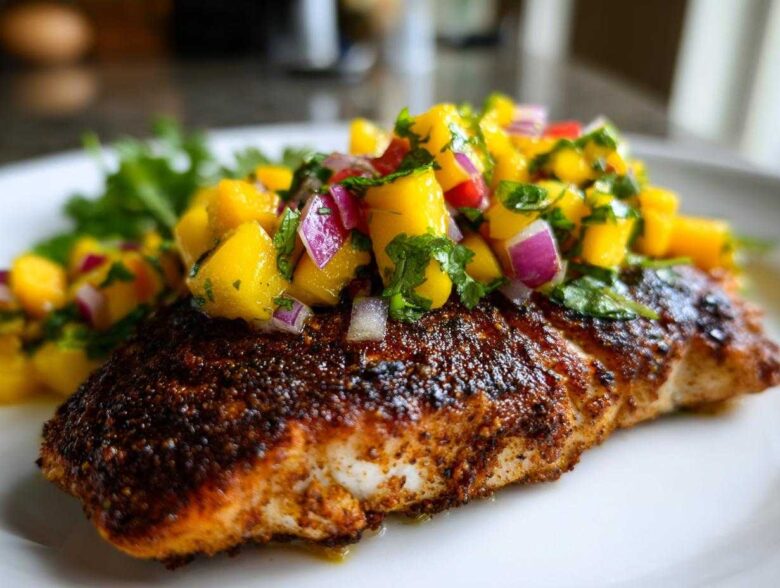
Oh my goodness, get ready for a dinner that tastes like a vacation! We’re talking about taking smoky, spicy, perfectly charred fish and topping it with the freshest, sweetest mango salsa you can imagine. This combination of intense heat and cool tropical sweetness is what I dream about on a Tuesday night. Honestly, when I first tried blackening fish at home years ago, I nearly set off the smoke alarm—it was a disaster! But I figured out the trick to getting that gorgeous, dark crust without setting off the fire sprinklers, and this Blackened Mahi Mahi with Mango Salsa recipe is the foolproof result. Trust me, once you nail this technique, you’ll be making flavorful white fish dinners every week!
Why This Blackened Mahi Mahi with Mango Salsa Recipe Works
This recipe is genuinely my go-to when I need something impressive fast. It hits all the right notes without hogging the kitchen for hours. Plus, the balance between that spicy crust and the cool salsa just sings!
- It’s lightning fast! Total time is right around 20 minutes—perfect for a weeknight meal.
- The flavor profile is dynamic: spicy, smoky spices meet bright, sweet fruit.
- It looks and tastes like it came from a fancy coastal restaurant, but you made it yourself. Check out some other great best summer fish recipes for inspiration!
Selecting the Best Fish for Blackened Mahi Mahi with Mango Salsa
Mahi Mahi is my absolute favorite for blackening because it’s meaty and firm. It holds up to that super high heat needed to create the crust without falling apart into sad flakes. When you’re picking it out, remember that quality really matters here, especially if you want that restaurant-style result.
Don’t just grab the first package you see! You want fish that looks vibrant. This fish takes seasoning so beautifully, so make sure it’s in great shape before you even think about mixing up your spices. If you’re curious about other ways to spice up firm fish, take a peek at these marinade ideas.
Mahi Mahi Quality Checklist
Always check these three things when you’re buying your fillets:
- **Appearance:** It should look glossy, almost translucent, with a nice pinkish-white color. No dull spots!
- **Smell:** It should smell clean, like the ocean. If it smells overly ‘fishy’ or ammoniated, walk away.
- **Feel:** Use your finger to gently prod it—it needs to spring right back. Squishy or mushy fish won’t blacken right.
Homemade Blackening Seasoning for Blackened Mahi Mahi
Okay, if you buy pre-mixed blackening seasoning, I won’t tell anyone, but you really, really should make your own! It’s just pantry staples, and you control the heat. This blend is what gives us that gorgeous, dark, flavor-packed crust we’re aiming for. Paprika gives it that beautiful deep red color—it’s honestly non-negotiable for the look.
The cayenne is where you adjust the temperature. I like it spicy, so I keep the full amount, but if heat makes you nervous, start with half! It’s all about layering those savory notes from the thyme and oregano. This recipe is pretty close to ones you’d find in great dip recipes, just geared toward fish!
Mixing the Perfect Blackening Spice Blend
You just combine everything—this is the easiest part! Make sure you get all the measurements exact, especially the salt and pepper, because that coating is what seasons the fish completely.
- 1 teaspoon paprika
- 1 teaspoon garlic powder
- 1 teaspoon onion powder
- 1/2 teaspoon dried thyme
- 1/2 teaspoon dried oregano
- 1/4 teaspoon cayenne pepper
- 1/4 teaspoon black pepper
- 1/2 teaspoon salt
Mix it all up in a tiny bowl until it looks uniform. Then, you’re ready for the fun part: coating the fish firmly!
Crafting the Easy Mango Salsa Recipe for Blackened Mahi Mahi
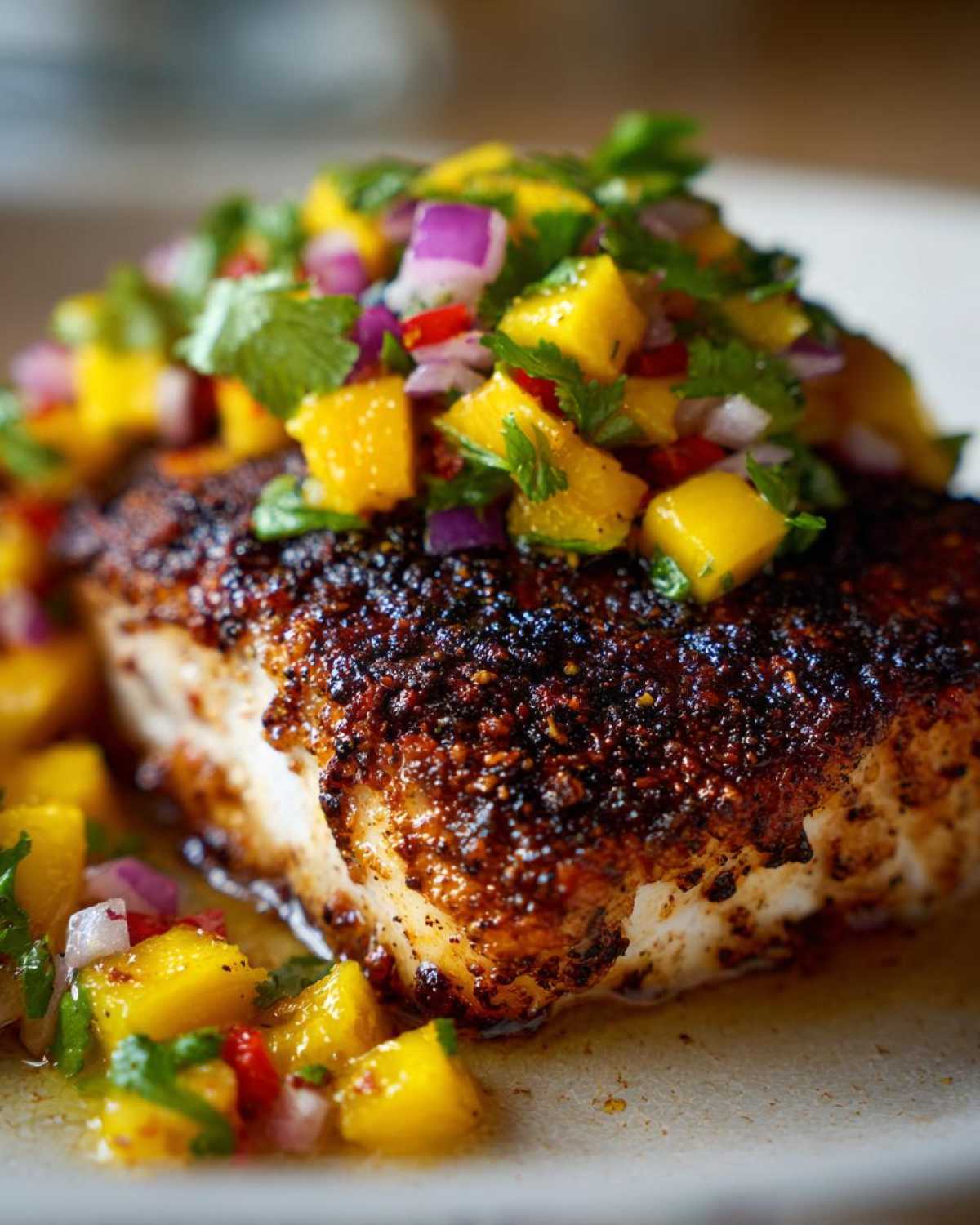
This salsa, my friends, is the cooling antidote to our smoky, spicy fish. It’s so bright and vibrant, and honestly, it takes about five minutes to toss together. If you ever worried about making a gourmet-tasting topping, stop stressing! This Easy Mango Salsa Recipe proves you only need simple, fresh ingredients to achieve that perfect tropical edge.
The combination of sweet mango hitting the savory, charred fish is just magic. I love working with fresh fruit toppings, just like when I make fresh peach salsa. Don’t skip that lime juice; it keeps the mango from browning and wakes up all the other flavors!
Tips for Perfect Salsa Consistency
The trick here is uniform dicing. If your onions are huge cubes and your mango pieces are tiny slivers, it looks sloppy! Try to dice everything roughly the same small size so you get a little bit of everything in every bite.
Once you mix the mango, red onion, cilantro, optional jalapeño, a drizzle of olive oil, and that essential lime juice, give it a gentle stir. Make this salsa while the fish is resting or just before you start cooking the fish. Letting it sit for 10 or 15 minutes helps the lime juice marry the mango sweetness—it’s worth the wait!
Step-by-Step Instructions for Perfect Blackened Mahi Mahi with Mango Salsa
Alright, this is where the magic happens! I’ll be honest, when you hear “blackened,” it sounds intimidating, like you need special equipment or a chimney outside. You do not! You just need a hot pan and confidence. This whole cooking process takes maybe eight minutes flat, so get your salsa ready first. If you want to see how I manage the smoke situation at my house, check out my guide on how to blacken fish at home.
Coating and Preheating for the Crust
First step, always, is making sure your fillets are super dry. Pat them down with paper towels until they feel tacky—this is non-negotiable for a good crust, just like we talked about with the fish quality! Now, take your homemade seasoning mix and press that coating onto both sides of the fish like you’re trying to get it to stick forever. Don’t just sprinkle it; really firmly press it in so it has somewhere to cling when it hits the heat.
Achieving the Ideal Blackened Crust
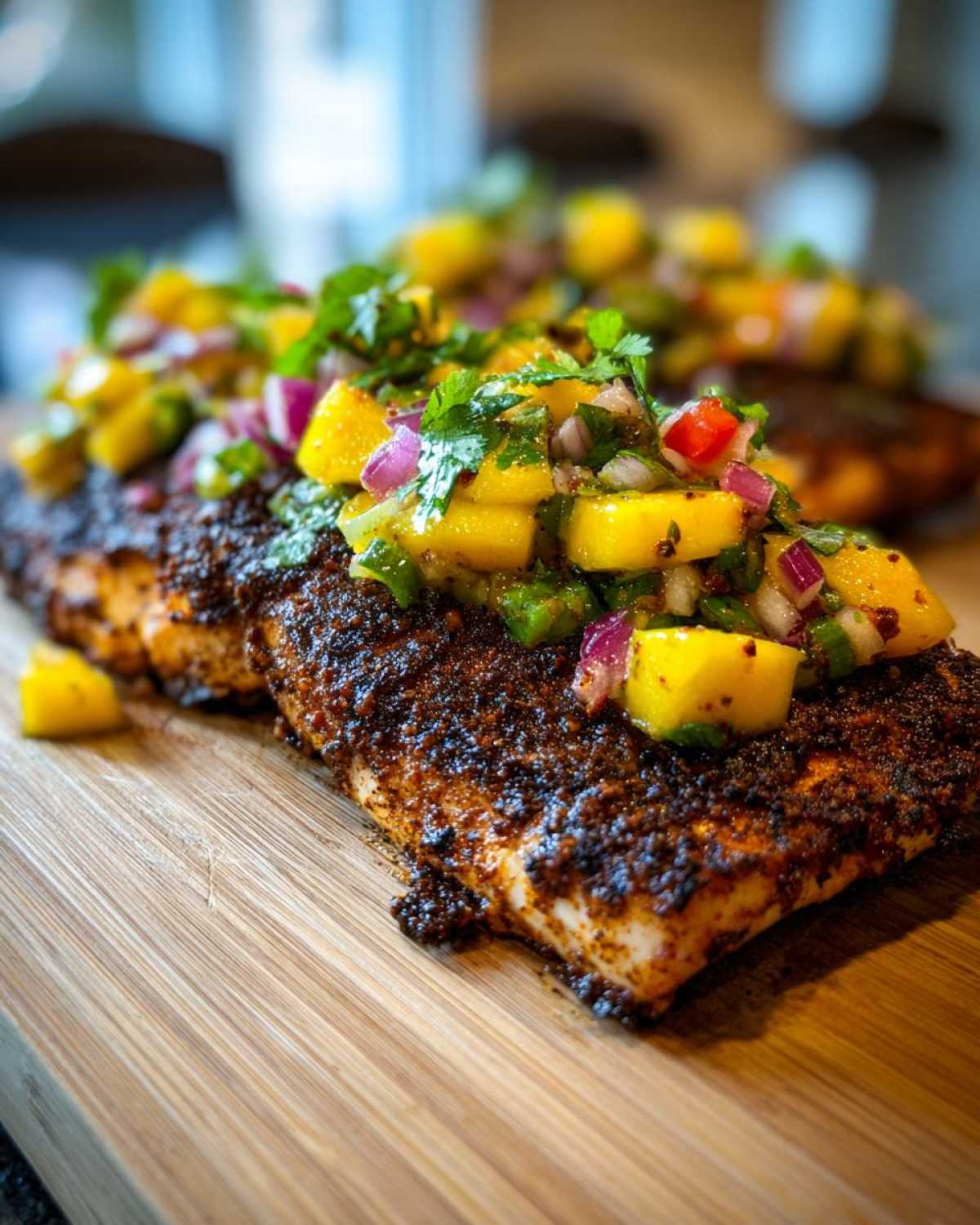
This requires aggression! Get a heavy cast-iron skillet—seriously, use cast iron if you have it—over medium-high heat. Add your oil and butter. You want that butter to melt, foam up, and then that foam has to almost disappear. The pan must be screaming hot before that fish even thinks about touching it. Ease those coated fillets right in. Don’t touch them for three to four minutes! Let that crust develop beautifully. Once you flip them, it’s another three to four minutes on the second side. The fish should be opaque and flake with a fork when it’s done. Pull it out immediately—overcooked fish is a crime!
Tips for Success When Making Blackened Mahi Mahi
Listen, blackening is intense cooking. Even with the best cast iron, you’re going to generate some smoke. I open every window, turn on the fan, and tell my husband to stand by with a small fire extinguisher—just kidding! Mostly. The key is keeping the pan hot enough so the spice *sears* instantly rather than just smoldering slowly and burning.
When you think the fish is done, take it off the heat, but don’t trust your eyes alone. Since Mahi Mahi is lean, it dries out fast if you push it past its limit. I keep my instant-read thermometer handy and aim right for 145 degrees Fahrenheit internally. If you don’t have one, gently prod the thickest part with a fork. If it separates easily into moist-looking flakes, you’re golden. Never let it look dry; the salsa is there to make it juicy, but the fish itself needs to be perfect first. For more ideas on keeping your seafood cooking flawless, check out my tips on flavorful white fish cooking.
Serving Suggestions for Your Tropical Fish Entree
You’ve nailed the fish and the salsa, now what goes next to it on the plate? We need sides that echo that bright, tropical theme without competing with the gorgeous spice of the blackening. My absolute favorite pairing for this Tropical Fish Entree is coconut rice—it’s creamy, mildly sweet, and it soaks up any juices perfectly.
If you’re keeping things lighter, a simple, crisp green salad tossed with a lime vinaigrette is wonderful. Or, skip the plate altogether and make these into amazing fish tacos! Just think light and fresh to balance out that smoky richness.
If you want to try something a bit heartier but still exotic, check out my recipe for coconut curry chickpea stew; it’s surprisingly delicious alongside spicy fish!
Storage and Reheating Instructions for Leftover Blackened Mahi Mahi
Now, I’m going to be real with you: this blackened mahi mahi is *best* eaten fresh off the skillet when that crust is crisp. Leftovers are sadly never quite the same, but totally salvageable!
If you have any, wrap the fish tightly and keep it in the fridge for up to two days. When reheating, skip the microwave entirely—it ruins the texture! I gently warm leftovers in a skillet over very low heat with just a tiny splash of water or oil, covered, for maybe two minutes per side. This keeps it from getting tough. Also, save the mango salsa separately, of course! That is always better fresh.
Frequently Asked Questions About Blackened Mahi Mahi with Mango Salsa
Can I use a different type of fish for this Blackened Fish Recipe?
You absolutely can! While Mahi Mahi is sturdy, this Blackened Fish Recipe works beautifully with other firm white fish. Think snapper, cod, or even thick airline chicken breasts if you aren’t feeling fishy that night. Just watch your timing closely. Flakier fish like haddock might need a little less time on that second side, so start checking for doneness a minute earlier than usual.
What if I don’t have a heavy cast iron skillet?
If your cast iron is hiding in the back of the cabinet, don’t panic! The goal is heat retention to sear the spices instantly. Use the heaviest stainless steel pan you own. The crucial thing is preheating it until it’s smoking hot before you add the oil and butter. If your pan cools down too fast when you add the fish, the seasoning will steam instead of blackening, and you won’t get that crust.
How far ahead can I make the Mango Salsa?
I find that the Fresh Salsa Recipes for Fish really shine when they get a little time to hang out, but not too much time! You can whip up the salsa and keep it covered in the fridge for about 4 to 6 hours. Any longer, and the lime juice starts to break down the fresh mango, and the salsa gets a little too watery. If you make it the morning of, give it a quick stir and maybe add an extra tiny squeeze of lime right before serving to bring back the zing!
If you end up with leftover blackened fish, you might want to try turning it into spicy fish tacos!
PrintBlackened Mahi Mahi with Mango Salsa
A recipe for pan-seared Mahi Mahi coated in a spicy blackening seasoning, served with a fresh, sweet mango salsa.
- Prep Time: 15 min
- Cook Time: 8 min
- Total Time: 23 min
- Yield: 2 servings
- Category: Dinner
- Method: Pan Searing
- Cuisine: American
- Diet: Low Fat
Ingredients
- 2 Mahi Mahi fillets (about 6 oz each)
- 1 tablespoon olive oil
- 1 tablespoon unsalted butter
- For the Blackening Seasoning:
- 1 teaspoon paprika
- 1 teaspoon garlic powder
- 1 teaspoon onion powder
- 1/2 teaspoon dried thyme
- 1/2 teaspoon dried oregano
- 1/4 teaspoon cayenne pepper
- 1/4 teaspoon black pepper
- 1/2 teaspoon salt
- For the Mango Salsa:
- 1 ripe mango, diced
- 1/4 cup red onion, finely diced
- 1/4 cup fresh cilantro, chopped
- 1 jalapeño, seeded and minced (optional)
- 1 tablespoon lime juice
- 1 teaspoon olive oil
Instructions
- Prepare the seasoning: Mix paprika, garlic powder, onion powder, thyme, oregano, cayenne pepper, black pepper, and salt in a small bowl.
- Pat the Mahi Mahi fillets dry with paper towels. This helps the seasoning adhere and promotes a better crust.
- Coat the fish: Press both sides of each fillet firmly into the blackening seasoning mix until fully coated.
- Prepare the salsa: In a separate bowl, combine the diced mango, red onion, cilantro, jalapeño (if using), lime juice, and 1 teaspoon of olive oil. Mix gently and set aside.
- Heat the skillet: Place a heavy, oven-safe skillet (cast iron is best) over medium-high heat. Add the olive oil and butter. Allow the butter to melt and foam, then subside slightly. The pan must be very hot.
- Blacken the fish: Carefully place the seasoned fillets in the hot skillet. Cook for 3 to 4 minutes on the first side without moving them to develop the crust.
- Flip the fish: Gently turn the fillets over. Cook for another 3 to 4 minutes, or until the fish flakes easily with a fork and reaches an internal temperature of 145 degrees Fahrenheit. Do not overcook.
- Serve immediately with a generous topping of the fresh mango salsa.
Notes
- Select Mahi Mahi that is firm to the touch and has a clean, oceanic smell. Avoid fish that appears dry or discolored.
- If you prefer less spice, reduce or omit the cayenne pepper in the seasoning blend.
- If you do not have an oven-safe skillet, you can cook the fish entirely on the stovetop, monitoring the heat closely to prevent burning the spices.
- This dish pairs well with coconut rice or a simple green salad.
Nutrition
- Serving Size: 1 fillet with salsa
- Calories: 350
- Sugar: 12
- Sodium: 450
- Fat: 15
- Saturated Fat: 4
- Unsaturated Fat: 11
- Trans Fat: 0
- Carbohydrates: 18
- Fiber: 3
- Protein: 38
- Cholesterol: 95
