Keto Creamy Garlic Herb Pork Tenderloin
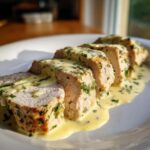
Make a tender, moist pork tenderloin coated in a rich, low-carb garlic and herb cream sauce. This recipe is quick and keto-friendly.
- Prep Time: 10 min
- Cook Time: 25 min
- Total Time: 35 min
- Yield: 4 servings
- Category: Dinner
- Method: Sear and Bake
- Cuisine: American
- Diet: Low Fat
Ingredients
Scale
- 1.5 lb pork tenderloin, trimmed
- 1 tablespoon olive oil
- 1 teaspoon salt
- 1/2 teaspoon black pepper
- 1 teaspoon dried thyme
- 1/2 teaspoon dried rosemary
- 4 cloves garlic, minced
- 1/2 cup chicken broth
- 1/2 cup heavy cream
- 2 ounces cream cheese, cubed
- 2 tablespoons fresh parsley, chopped
Instructions
- Preheat your oven to 400°F (200°C).
- Pat the pork tenderloin dry with paper towels.
- In a small bowl, mix the salt, pepper, thyme, and rosemary. Rub this mixture evenly over the entire surface of the pork tenderloin.
- Heat the olive oil in an oven-safe skillet over medium-high heat. Sear the pork for 2-3 minutes on each side until browned.
- Remove the skillet from the heat. Transfer the skillet to the preheated oven and roast for 15-20 minutes, or until the internal temperature reaches 145°F (63°C).
- Remove the pork from the skillet and set it aside on a cutting board to rest, covering it loosely with foil.
- Place the skillet back on the stovetop over medium heat. Add the minced garlic and cook for 30 seconds until fragrant.
- Pour in the chicken broth and scrape up any browned bits from the bottom of the pan. Let it simmer for 1 minute.
- Reduce the heat to low. Whisk in the heavy cream and the cubed cream cheese until the sauce is smooth and fully melted.
- Stir in the fresh parsley. Taste the sauce and add more salt or pepper if needed.
- Slice the rested pork tenderloin into medallions and spoon the creamy garlic herb sauce generously over the top before serving.
Notes
- For an even richer sauce, you can add 1/4 cup of grated Parmesan cheese along with the cream cheese.
- If you do not have an oven-safe skillet, sear the pork in a regular skillet and then transfer it to a baking dish before roasting.
- Resting the pork for 5-10 minutes after cooking keeps the juices inside, resulting in a more tender final product.
Nutrition
- Serving Size: 4 oz pork with sauce
- Calories: 380
- Sugar: 2
- Sodium: 450
- Fat: 26
- Saturated Fat: 12
- Unsaturated Fat: 14
- Trans Fat: 0
- Carbohydrates: 4
- Fiber: 1
- Protein: 32
- Cholesterol: 105
