

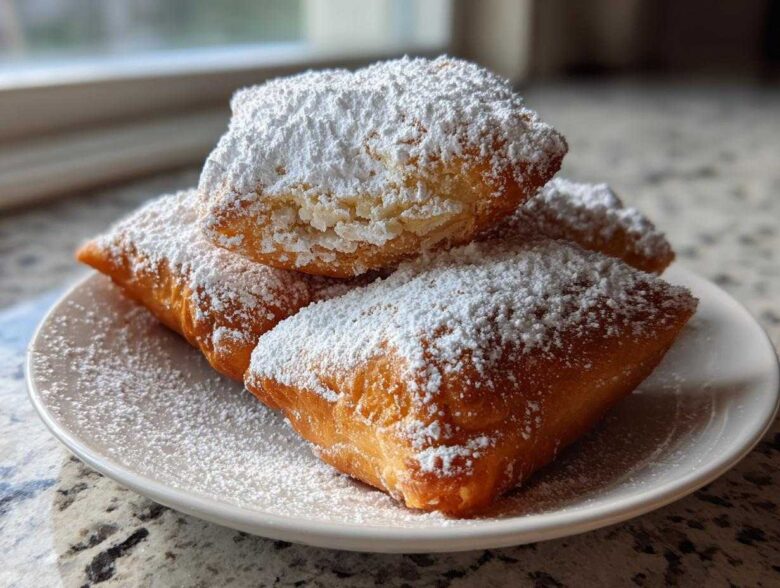
Oh, listen, if you’ve never been down to the French Quarter when the air is thick and sweet, you just haven’t lived! That unmistakable scent of yeast and hot sugar floating out of a coffee stand—that’s pure magic, right? Forget those sad, pale things you sometimes see; I spent years trying to nail down that perfect cloud of fried dough. Trust me, I’ve chased that ethereal, pillow-soft inside and crisp, crackly outside for what feels like forever.
But I figured it out! This recipe for New Orleans Beignets With Powdered Sugar isn’t just good, it’s the real deal. We’re using yeast the old-fashioned way to get those glorious air pockets. These aren’t those dense, cakey doughnuts; these are light, airy fritters that practically float away when you pick them up. You’re going to want to make double because they disappear fast!
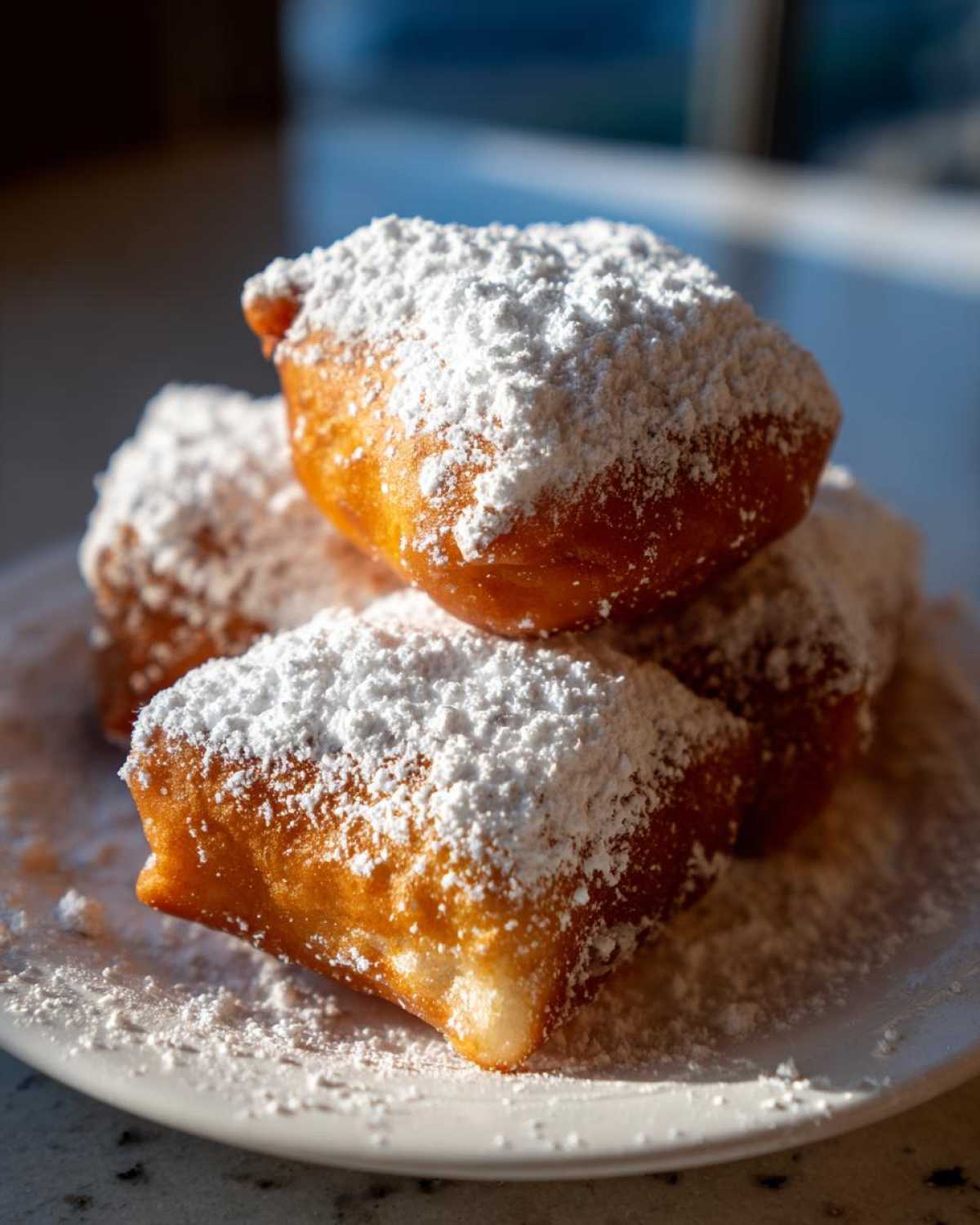
Why You Must Make These New Orleans Beignets With Powdered Sugar
Listen, once you try these homemade pillows of deliciousness, you won’t go back to anything else. Here’s why this batch is totally worth the effort:
- We achieve that signature light, airy texture that melts instantly in your mouth. No heavy, greasy discs here!
- The flavor is genuinely authentic—just like you’re sitting right on Royal Street this morning.
- The sheer joy of seeing that mountain of confectioners’ sugar explode when you dust the warm New Orleans Beignets With Powdered Sugar is unmatched.
If you’re looking for slightly different breakfast ideas, check out my easy French toast recipe, but trust me, you need these beignets in your life first!
Essential Ingredients for New Orleans Beignets With Powdered Sugar
Okay, the right ingredients are non-negotiable here. You can’t fake authentic New Orleans flavor, especially since we’re ditching shortcuts like baking powder. We need real, active dry yeast; this is what gives us those dreamy, fluffy interiors. Make sure your water is perfectly warm—like a nice, long bath, not hot tub levels—usually between 105°F and 115°F. That yeast is picky, so treat it right!
We use evaporated milk because it adds a little something extra that regular milk just doesn’t bring to this yeasted dough. You’ll also need one standard large egg and just a touch of salt to balance that sweetness. Finally, you’ll need between 3 1/2 and 4 cups of all-purpose flour. And please, make sure you have tons—I mean *tons*—of confectioners’ sugar ready for dusting later. It’s the final, beautiful mess!
If you need something sweet but less hands-on, you absolutely have to try my easy bread pudding recipe next!
Step-by-Step Guide: How to Make Beignets at Home
Alright, deep breath! This is where the magic actually happens. Making great **New Orleans Beignets With Powdered Sugar** isn’t hard, but it does require respecting the yeast’s schedule. We have to treat this dough kindly so it gives us those beautiful, puffy centers we crave. Don’t rush the rising time—that’s your ticket to a light, pillowy fritter instead of a dense fried brick. We’re going through the yeast kick-off, the kneading, the waiting game, and finally, that glorious frying moment.
If you’re looking for other great ways to enjoy a rich breakfast pastry, you might want to peek at my classic French toast recipe while your dough is rising!
Making the Yeasted Dough for New Orleans Beignets With Powdered Sugar
First things first: wake up that yeast! Mix your yeast into one cup of warm water—remember, we said ‘warm bath’ temperature, around 110°F. If it’s too cold, nothing happens; too hot, and you kill it dead. Wait five minutes until it looks foamy and bubbly. That means the yeast is happy and ready to work its delicious magic.
Next, stir in the sugar, the lightly beaten egg, salt, and that special evaporated milk. Start adding the flour gradually. When it finally comes together into a soft ball, slide it onto your counter. Now, this is my secret tip: don’t knead it until your arms hurt! You only need about five to seven minutes until it’s smooth and elastic. Over-kneading makes them tough, and we want soft clouds, remember?
Proofing and Rolling Out the Dough
Once you’ve got that smooth dough, toss it into a lightly oiled bowl and cover it tight. It needs about an hour and a half in a warm spot—no cold drafts! You’ll know it’s ready when it’s doubled, looking puffy and begging to be punched down (go ahead, give it a gentle press!).
When you turn it out, lightly flour your surface. Roll it out evenly to exactly 1/4 inch thickness. If it’s too thin, it fries too fast and gets greasy; too thick, and the middle stays raw. I cut mine into neat 3-inch squares. If you have time, letting these squares rest for 15 minutes uncovered before frying helps them puff up even more dramatically!
Fluffy Beignet Frying Technique
This is the part where things get serious! You absolutely must have a deep, heavy-bottomed pot or a deep fryer. Fill it with 2 to 3 inches of vegetable oil and heat it precisely to 375°F. Resist the urge to just guess because temperature management is key to that light texture.
Carefully lower just 3 or 4 squares at a time—do not crowd your pot! Overcrowding drops the temperature instantly, and that’s how you get greasy beignets. They only need about one to two minutes per side. Look for that beautiful, puffy golden brown color, flip them gently, and pull them out right away!
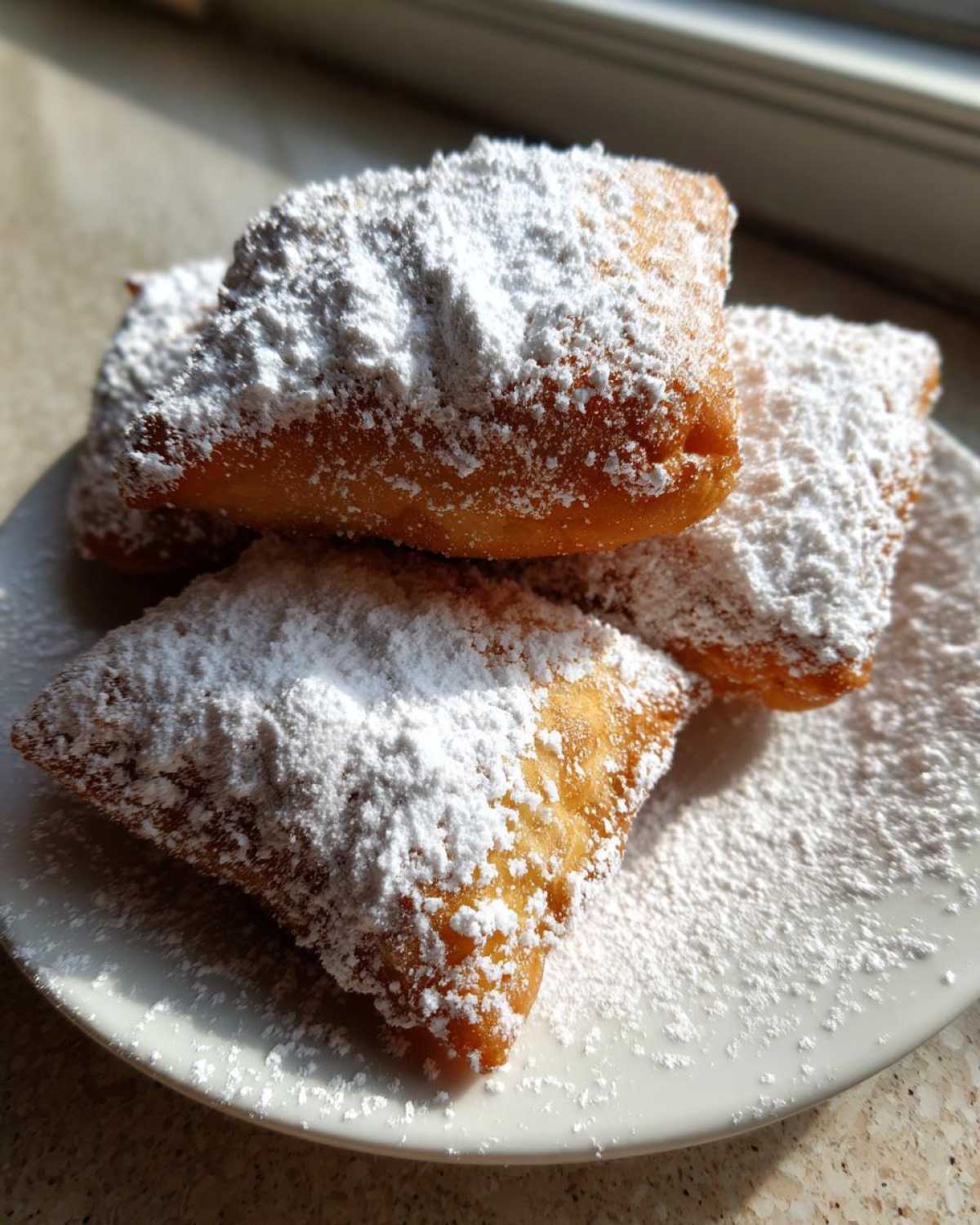
The Final Dusting: Achieving the Homemade Beignet Powdered Sugar Burst
Don’t let them sit around cooling! They need that final shower while they are still warm enough to slightly melt the sugar into a glaze just below the surface. Use a slotted spoon to lift them onto paper-towel-lined racks to catch the extra oil. Then, grab your biggest sieve or sifter and go wild! We aren’t shy with the confectioners’ sugar here; this is New Orleans, after all. The combination of the warm, slightly crisp fried dough and the sweet dusting is what makes these truly incredible.
Perfect Beignet Texture Secrets and Troubleshooting
Okay, you followed the steps, but maybe your beignets turned out a little flat? Don’t panic! Even in the French Quarter, sometimes the dough doesn’t cooperate. My biggest advice for achieving those **Perfect Beignet Texture Secrets** is temperature control. If your oil dips below 365°F, your dough soaks up oil instead of puffing, and that’s what makes them heavy.
Also, if they look greasy, check your drain time. They need a good minute on paper towels. If they don’t puff much, you might have over-kneaded them, killing the yeast’s lift, or perhaps your yeast wasn’t active enough to begin with. Remember this: warm oil and a light hand during kneading are your best friends for fluffy fried dough!
If you’re craving something else sweet but less fried treat, you might enjoy my easy classic sugar cookie bars.
Ingredient Notes and Substitutions for New Orleans Beignets With Powdered Sugar
I get a ton of questions about the ingredients—can I use baking powder? Can I swap out the milk? Look, if you want the real deal, we need to stick pretty close to the script for these **New Orleans Beignets With Powdered Sugar** because tradition counts for a lot here. The biggest ingredient mystery I always get asked about is the evaporated milk.
Why evaporated milk? Honestly, it’s about richness and that slight density that separates a good homemade beignet from a great one. It has a higher concentration of milk solids than regular milk, and it just helps stabilize the dough a tiny bit against the heat of the fryer. I tried regular milk once, and while decent, it just wasn’t the same iconic flavor profile.
Now, for flour—I stick to all-purpose flour. It balances the gluten development perfectly for that light interior. If you absolutely *must* experiment, you could try swapping out maybe a half-cup for bread flour to get a slightly chewier final product, but I stress this: if you swap too much, you’re moving into doughnut territory, not authentic New Orleans fried dough territory.
If you’re looking for a slightly different sweet bake in the meantime, my chocolate chip zucchini bread is a showstopper!
Serving Suggestions for This Traditional French Quarter Dessert
These beignets are truly best consumed within five minutes of leaving the fryer! They are a breakfast royal, an afternoon treat, or even a late-night celebration food. There’s only one perfect pairing, in my opinion, and you already know what it is—coffee. Strong, dark coffee is mandatory to cut through the sweetness of all that powdered sugar.
If you want the true Café Du Monde vibe, you need a café au lait! That mixture of chicory coffee and steamed milk is the ideal companion. If you’re not quite ready for the full chicory experience, you could try making my caramel brown sugar latte at home for a slightly different, but equally cozy, coffee moment alongside your pastries.
Always serve them piled high on a platter! The whole point is that gorgeous white mountain of powdered sugar that makes everyone reach for one immediately. Don’t worry about serving utensils; these are finger food done right!
Storage and Reheating Instructions for Leftover New Orleans Beignets With Powdered Sugar
Okay, let’s be real: leftovers aren’t usually a thing, because who can stop at just two? But life happens, and sometimes you have a few of these glorious pillows left over. They are absolutely best eaten piping hot the second they come out of the oil, but I’ve figured out ways to rescue them the next day.
First, *never* put the powdered sugar on if you plan to store them! The moisture from the beignet will wick up the sugar, making a sticky, wet paste instead of our beautiful powder cloud. Store cooled beignets in an airtight container at room temperature for up to two days. They will flatten out a bit, but don’t fret!
When it’s time for a refresh, ditch the microwave if you can. The microwave turns them instantly sad and rubbery. For the best result, preheat your oven to about 300°F. I like to pop them directly on the warm rack for just about five minutes. That little blast of dry heat actually wakes up the dough and crisps up the outside again.
If you’re craving something else warm and yeasty later, keep my apple cinnamon rolls recipe handy, but for these beignets, the oven revival works wonders before you hit them with that gorgeous finishing coat of **New Orleans Beignets With Powdered Sugar**!
Frequently Asked Questions About Making Beignets
I get so many messages after folks try this recipe, especially when they are attempting that **Classic Louisiana Fried Dough** for the first time. Don’t worry if you run into a snag! Here are the things I hear most often about achieving that perfect rise and texture.
Can I skip the yeast and use baking powder for my fried dough?
Oh boy, this is the biggest question! You certainly *can* use baking powder, but then you are making a doughnut, not a true New Orleans beignet. The whole point of the authentic experience—that light, airy, almost chewy texture—comes from that slow, controlled rise provided by the yeast. Baking powder is fast; yeast is complex. Stick to the yeast for that **Perfect Beignet Texture Secrets**!
Why are my beignets coming out flat instead of puffy?
This usually comes down to two culprits, and both relate to temperature or time. First, if your oil wasn’t hot enough (below 375°F), the dough just soaks up the oil instead of puffing away from it. Second, if you overworked the dough during kneading or punching it down too aggressively, you knocked out all the precious gas created by the yeast. Remember, we want a *gentle* hand with this dough!
How important is the 375°F oil temperature?
It’s everything! I can’t stress this enough for anyone attempting these **Yeasted Dough Fritters**. Too low, and they get greasy and heavy. Too high, and the outside burns to a crisp while the middle remains raw dough—which is dangerous, by the way. If you don’t own a candy or deep-fry thermometer, please buy one before you start! It’s the best $10 investment you can make for your frying life.
Can I make the dough ahead of time?
Yes, you can! This is great for making a **New Orleans Breakfast Pastry Recipe** the night before. After kneading, place the dough in an oiled bowl, cover it tightly, and put it right in the fridge for up to 24 hours. Just let it sit on the counter for about 45 minutes to take the chill off before rolling and cutting. It really deepens the flavor, too!
If you’re looking for another make-ahead treat, my oatmeal chocolate chip muffins are perfect for grab-and-go mornings!
Share Your Homemade New Orleans Beignets With Powdered Sugar
Alright, you’ve done it! You’ve faced the hot oil, you’ve dealt with the sugar snowstorm, and now you have a plate piled high with beautiful, square clouds of bliss. Now comes the best part: showing off your hard work!
I absolutely live for seeing your creations. Seriously, tag me on social media or drop a picture down below in the comments! Let me know how high your beignets puffed up and if you managed to get that perfect, messy look from the confectioners’ sugar. Did you manage to keep any left over for the next day? (I doubt it!)
Don’t forget to rate this recipe if you thought it was worth the effort of getting that oil hot! Your feedback helps other bakers feel confident tackling this ultimate **New Orleans Beignets With Powdered Sugar** recipe. Happy frying, and feel free to browse my main recipe index for your next delicious adventure!
PrintAuthentic New Orleans Beignets
Follow these steps to make classic, airy New Orleans style beignets dusted heavily with powdered sugar.
- Prep Time: 30 min
- Cook Time: 15 min
- Total Time: 1 hour 45 min
- Yield: About 18 beignets
- Category: Dessert
- Method: Deep Frying
- Cuisine: American (Louisiana)
- Diet: Vegetarian
Ingredients
- 1 cup warm water (105-115°F)
- 2 1/4 teaspoons active dry yeast
- 1/4 cup granulated sugar
- 1 large egg, lightly beaten
- 1/2 teaspoon salt
- 1/4 cup evaporated milk
- 3 1/2 to 4 cups all-purpose flour
- Vegetable oil, for frying
- Confectioners’ sugar, for dusting
Instructions
- Activate the yeast: In a large bowl, combine the warm water and yeast. Let stand for 5 minutes until foamy.
- Add the granulated sugar, beaten egg, salt, and evaporated milk to the yeast mixture. Stir to combine.
- Gradually add the flour, one cup at a time, mixing until a soft dough forms.
- Turn the dough out onto a lightly floured surface and knead for 5 to 7 minutes until the dough is smooth and elastic.
- Place the dough in a lightly oiled bowl, turning to coat. Cover the bowl with plastic wrap or a clean towel.
- Let the dough rise in a warm place for 1 to 1 1/2 hours, or until doubled in size.
- Gently punch down the dough. On a lightly floured surface, roll the dough out to about 1/4 inch thickness.
- Cut the dough into 3-inch squares.
- Heat 2 to 3 inches of vegetable oil in a deep, heavy-bottomed pot or deep fryer to 375°F (190°C). Use a thermometer to monitor the temperature.
- Carefully drop 3 or 4 dough squares into the hot oil, being careful not to overcrowd the pot.
- Fry for about 1 to 2 minutes per side, turning once, until the beignets are puffed and golden brown. They should puff up significantly.
- Remove the beignets with a slotted spoon and place them on a wire rack lined with paper towels to drain excess oil.
- While still warm, generously dust the beignets with confectioners’ sugar. Serve immediately.
Notes
- If your oil temperature drops below 365°F, the beignets will absorb too much oil and become greasy. If it is too high, they will brown quickly before cooking through.
- For the best texture, do not over-knead the dough after the first rise.
- If you want a very light texture, let the cut squares rest for 15 minutes before frying.
Nutrition
- Serving Size: 2 beignets
- Calories: 300
- Sugar: 15
- Sodium: 150
- Fat: 12
- Saturated Fat: 3
- Unsaturated Fat: 9
- Trans Fat: 0
- Carbohydrates: 40
- Fiber: 1
- Protein: 5
- Cholesterol: 30
