

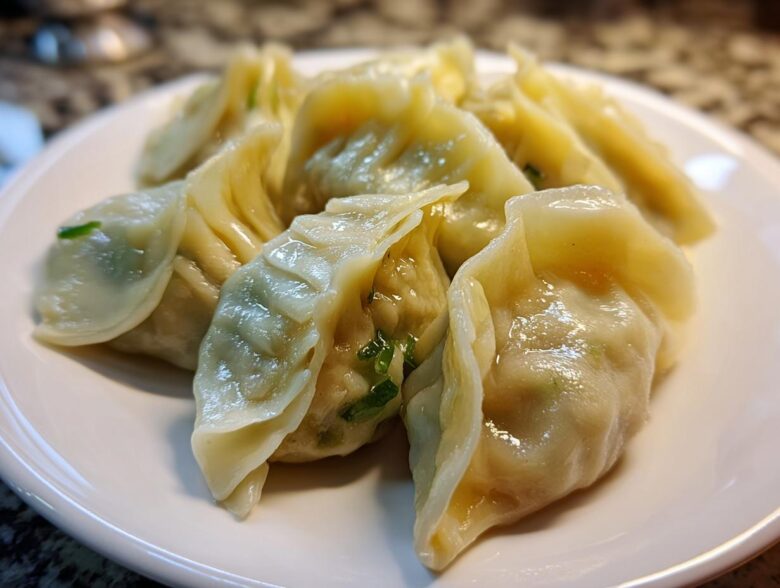
Oh, there is just nothing, absolutely *nothing*, that beats pulling a batch of homemade dumplings out of the steamer. The smell alone transports me right back to Anya’s kitchen when we were figuring out this recipe together! Making **Traditional Chinese Dumplings** is a labor of love, sure, but as Anya reminds us, it’s a ritual that connects us to tradition. We aren’t just making dinner; we’re crafting something meaningful. Trust me when I say that once you tackle the scratch wrappers for these incredible *pork cabbage dumplings*, you’ll never go back. It’s worth grabbing your friends, playing your favorite music, and diving into this adventure! If you want more recipes that bring people together like ours did, check out everything we’ve been cooking up over at our main blog page.
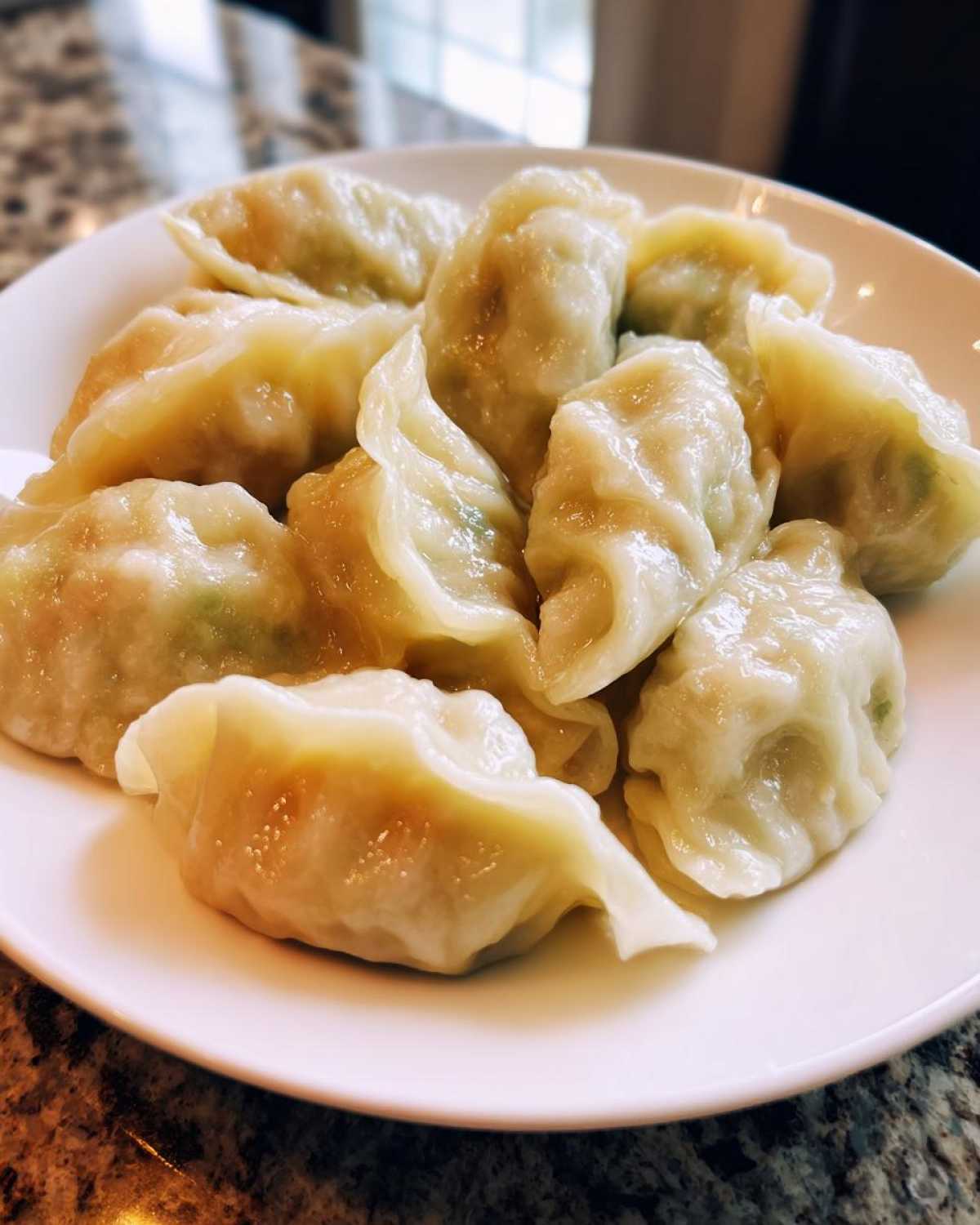
Why Making Traditional Chinese Dumplings is Worth the Effort
I know the first time you see the instruction to make your own wrappers, your heart sinks a little. Trust me, I’ve been there! Sasha almost quit on me that first day, worried we wouldn’t get them done fast enough. But Anya reminds us all the time: the effort is what makes these **Traditional Chinese Dumplings** so wonderfully satisfying.
- The flavor of fresh filling mixing with a freshly made wrapper is worlds apart from anything you buy pre-made.
- There is a real sense of accomplishment when you look at a plate stacked high with all those perfect little packages!
- These taste like celebration—they are simply the perfect choice when you’re building up to something special, like making **lunar new year dumplings**.
The Flavor Difference in Authentic Jiaozi
Store-bought wrappers are often thick and slightly chewy when cooked. When you use these *homemade dumpling wrappers*, the texture when you eat **boiled Chinese dumplings** is delicate, almost silken. You taste the savory pork and cabbage filling so much better because the wrapper melts away slightly. It’s a game-changer, honestly, and it’s what makes this **authentic jiaozi** taste genuinely right.
Gathering Ingredients for Your Traditional Chinese Dumplings
Okay, time to get your station set up! For the best **pork cabbage dumplings**, fresh ingredients are honestly non-negotiable. I keep my pantry stocked with the essentials, but the freshness of the vegetables is what sets these apart. Remember, we are aiming for that beautiful, savory punch of **authentic jiaozi**!
You’ll need 2 cups of all-purpose flour and about 3/4 cup of warm water for the dough. For the filling, it’s exactly 1 pound of ground pork, and please make sure you get 3 cups of *finely chopped* Napa cabbage—texture matters here! Don’t forget the aromatics: a handful of chopped green onions, 2 tablespoons of soy sauce, that fragrant 1 tablespoon of sesame oil, and that tiny little bit of magic, 1 teaspoon of grated fresh ginger. Salt and white pepper round it out.
Tips for Perfecting Your Pork Cabbage Dumplings Filling
Now for the secret move that Anya insists on for the best texture, even for easy weeknight dinners! Once everything is in the bowl—the pork, cabbage, and all those lovely flavorings—you absolutely must mix it *in one direction*. Seriously, pick one way, maybe clockwise, and just keep going. You’ll feel it change consistency!
Keep stirring until the entire mixture starts to get slightly sticky. That stickiness means the proteins are bonding, which is what keeps your filling moist and stops it from crumbling out when you steam your **Traditional Chinese Dumplings**. And that little bit of ginger? It’s like a whisper of warmth that really wakes up the pork!
Mastering Homemade Dumpling Wrappers for Traditional Chinese Dumplings
Okay, deep breath! This is where people sometimes get intimidated, but I promise you, this part is actually super zen once you get started. Making the dough for **Traditional Chinese Dumplings** takes just a few minutes of actual work, but the resting time is absolutely essential. You start by putting your flour in a big bowl. Slowly drizzle in about 3/4 cup of warm water while you mix it with chopsticks—Sasha always laughs because it looks like nothing is happening at first! Keep mixing until you get these shaggy little pieces.
Once it comes together, you need to knead it on a lightly floured surface for a good 8 to 10 minutes. It needs to be smooth, supple, and elastic. Anya told me that when she first tried this, her dough was rock hard! But don’t worry if yours isn’t perfect right away. The real magic happens next: cover the dough with plastic wrap and let it rest for at least 30 minutes. That downtime lets the gluten relax, and that’s what makes rolling out those beautiful **homemade dumpling wrappers** possible afterward.
Techniques for Rolling Thin Homemade Dumpling Wrappers
This is the specific detail that separates good wrappers from *great* wrappers. Divide your rested dough into smaller sections, roll them into ropes, and cut them into 1-inch pieces. Now, as you roll each tiny piece into a circle, you need to focus your pressure. Make sure the center is robust enough to hold that spoonful of pork filling we made earlier.
However, you want the outer rim, the edge that you’ll be crimping, to be significantly thinner. Think of the final wrapper as a little drum head—thick center, delicate edges. If the edges are too thick, you end up with a doughy bite which ruins the experience of eating **authentic jiaozi**! It takes a little practice to keep that center plump while thinning the perimeter, but trust the process, you’ll get the hang of it!
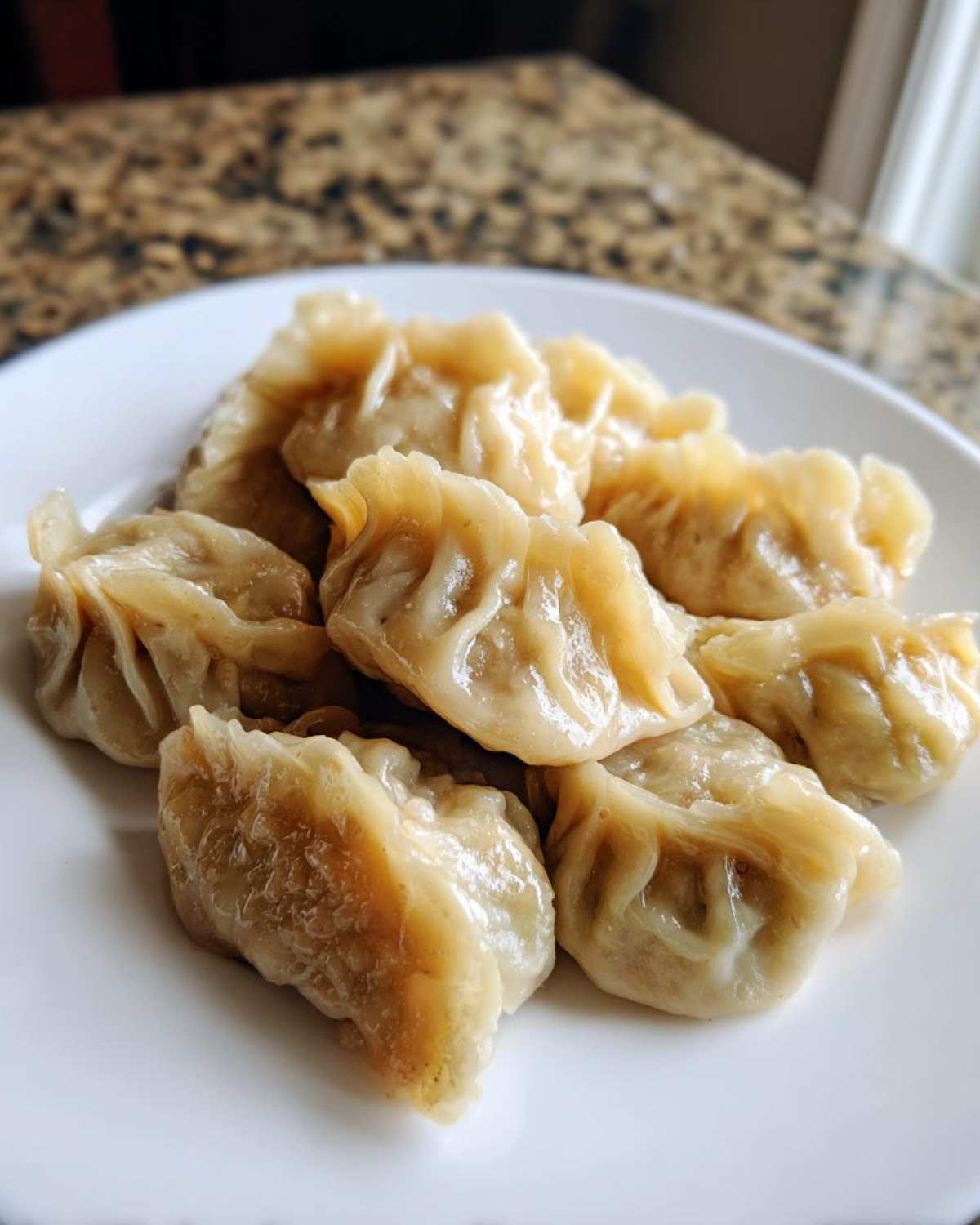
Assembling and Pleating Your Traditional Chinese Dumplings
Now comes the fun, slightly messy part—putting all that amazing filling into those gorgeous **homemade dumpling wrappers**! Remember, you want about a tablespoon of that savory pork and cabbage mixture right in the middle of your thin wrapper circle. Don’t overstuff them; that’s the number one mistake I see people make! I’m always telling Sasha to pull back on the filling, or the poor little things just burst open in the pot later.
To get a good seal, take a tiny bit of water on your finger and run it all around the outer edge of the wrapper. Then, fold that wrapper in half right over the filling to form that perfect half-moon shape. This is the basic structure for all **authentic jiaozi**.
The sealing is crucial. You can simply crimp the edges tightly together, or you can go for the full decorative pleat. Honestly, don’t stress about the perfect pleat the first time; just make sure it’s sealed tight enough that no filling escapes when it hits the water! If you’re struggling with the pleating, I highly recommend watching a quick video from Anya’s collection online—it makes way more sense visually! Once they’re sealed, put them on a floured tray so they are ready for cooking. If you are looking for other ways to get amazing flavor into your mains, you might enjoy checking out our teriyaki recipe!
Cooking Methods for Delicious Boiled Chinese Dumplings
Now for the moment of truth! For these **Traditional Chinese Dumplings**, boiling is the classic, simplest method, and it gives you that wonderfully silky texture. First, get a really big pot of water going. You need a solid, rolling boil—no timid simmering here! Gently drop your dumplings in, but don’t shock the water by adding too many at once. Overcrowding drops the temperature way too fast.
Give them a really gentle stir right away with a wooden spoon so they don’t glue themselves to the bottom. You’ll know they are halfway done when they all float to the surface. That’s your cue! Once they float, let those **boiled Chinese dumplings** cook for just another 3 to 5 minutes to make sure that pork filling is completely cooked through. Remove them with a slotted spoon and get ready to feast!
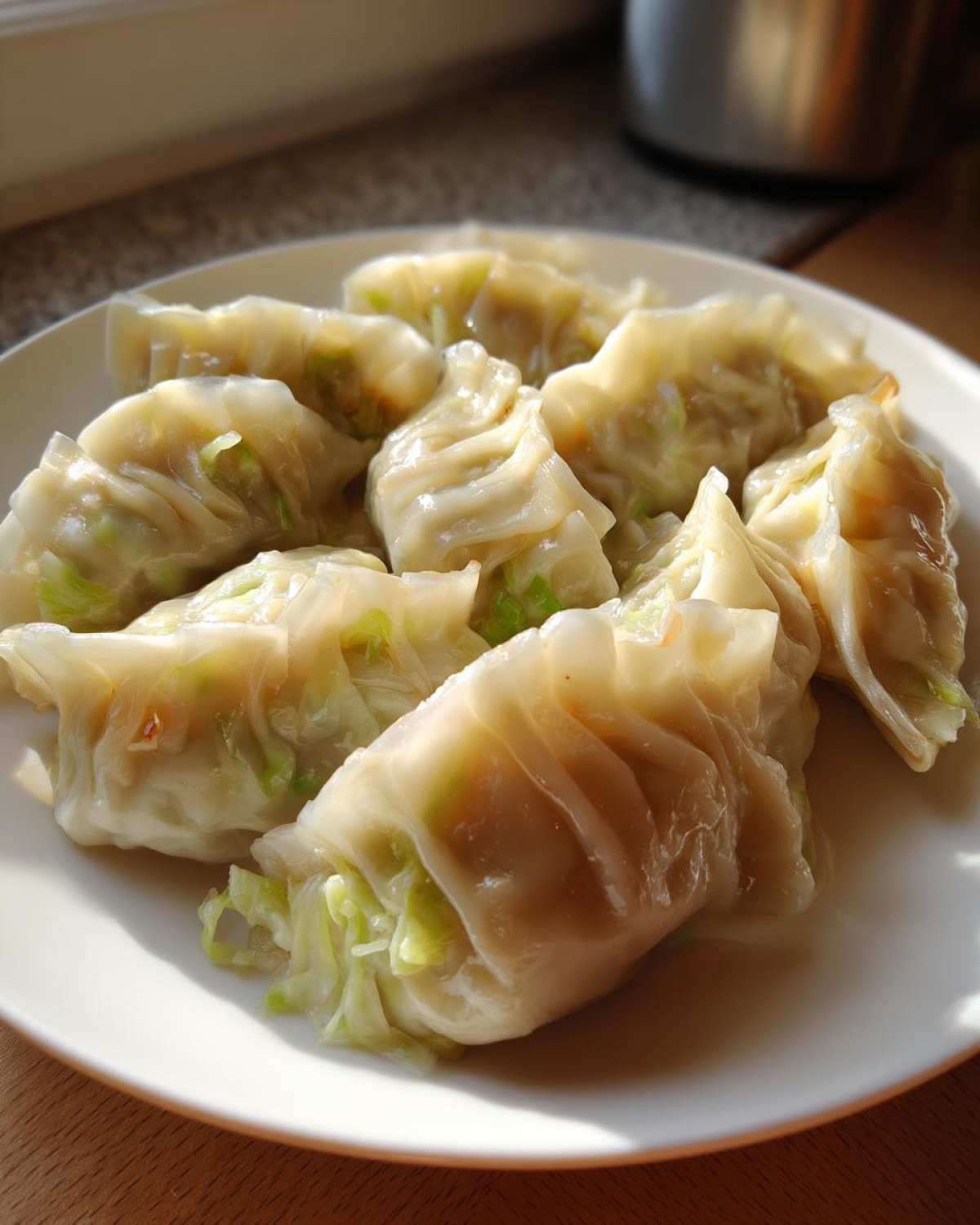
Alternative: Achieving Perfect Pan-Fried Traditional Chinese Dumplings
If you are craving a crispy bottom, you can absolutely pivot to potstickers! Lightly oil a skillet—I mean just barely coat the bottom—and place your assembled dumplings flat side down. Cook them over medium-high heat until those bottoms are golden brown and look perfectly crispy. Don’t touch them while they crisp!
Then, pour in just a half-inch of water, immediately cover the pan, and let them steam for about 5 to 7 minutes until the water evaporates and the filling is done. It’s such a great texture contrast! Speaking of flavor contrasts, if you ever want a different kind of delicious finish to a meal, you should check out our miso salmon recipe.
Making Traditional Chinese Dumplings Freezer Friendly
If you’ve gone to the trouble of making **homemade dumpling wrappers** and such a beautiful filling, you absolutely must make a double batch! Seriously, these are the best **lunar new year dumplings** when made fresh, but they freeze like a dream. This is my secret weapon for busy weeks.
Here’s the trick for **freezer friendly dumplings**: After you’ve assembled all your **Traditional Chinese Dumplings**, don’t stack them! Lay them individually on a baking sheet lined with parchment paper. Make sure they aren’t touching each other. Stick that whole sheet in the freezer until those little guys are rock solid—we call this flash freezing. Once they are frozen solid, you can transfer all of them into a big airtight bag or container. This keeps them from turning into one giant dumpling brick!
When you want to cook them later, just boil them directly from frozen—you might need an extra minute or two in the water. If you need another Asian-inspired recipe for leftovers, you might love our Kung Pao Cauliflower!
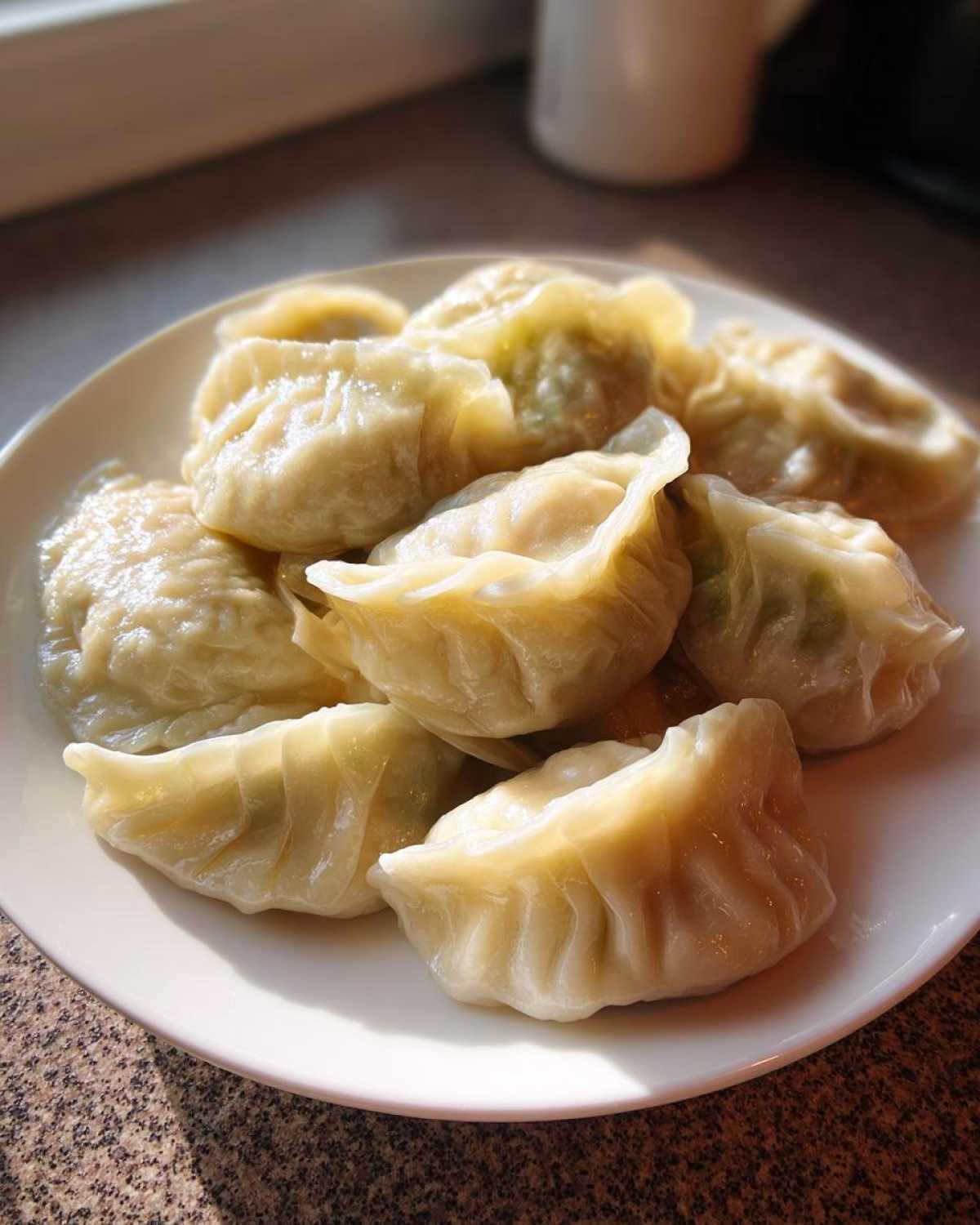
Ingredient Notes and Substitutions for Your Chinese Dumplings Recipe
I always want everyone to feel like they can make our **Chinese dumplings recipe** their own. If you are in a pinch, like I often am, you can absolutely sub out the Napa cabbage! The recipe notes mention using regular green cabbage, and that works fine, though Napa is just a tiny bit sweeter and more tender after cooking. Don’t sweat it if you don’t have it.
For the meat, while pork is the most traditional choice for **pork cabbage dumplings**, an 80/20 ground chicken or even ground turkey works well if you watch your seasoning a bit. Just make sure whatever meat you choose, you mix it that same specific direction until it gets sticky for the best texture!
Frequently Asked Questions About Traditional Chinese Dumplings
I always get so many questions once people start making these at home! It shows me you’re all really diving into the process, which is wonderful. We’ve tried just about every variation under the sun in our little kitchen headquarters, so I’m happy to share what we’ve learned about our **Traditional Chinese Dumplings**.
Can I use store-bought wrappers instead of making homemade dumpling wrappers?
Oh, you totally can, especially if you’re in a pinch or making **lunar new year dumplings** for a massive crowd! Store-bought wrappers save you maybe 45 minutes of work. However, I have to warn you: the experience of eating **boiled Chinese dumplings** changes. The homemade wrappers are just silkier! If you do use them, try to find fresh ones, not the dried-out kinds in the refrigerated section.
What is the best dipping sauce for pork cabbage dumplings?
My favorite simple dipping sauce is actually something Sasha threw together when we ran out of soy sauce one night! It’s a mix of 2 parts soy sauce, 1 part rice vinegar, a dash of sesame oil, and a tiny pinch of sugar. For a real kick with your **pork cabbage dumplings**, a drizzle of chili oil works miracles. It’s so easy, and you can find a few of our quick sauce ideas on our blog!
I can’t get my pleats right! How do I prevent pleats from breaking?
This is so common! The pleats break because the edges got a little too dry. When you are sealing those **authentic jiaozi**, make sure you moisten the entire outer rim generously. Use your finger—it holds more moisture than a brush. Also, go easy on the filling; don’t let it pile up too high in the center, or the dough has too much stress across the top as you fold it. Less filling equals a stronger seal!
How long can I store the uncooked dumplings before cooking?
If you made a double batch but aren’t quite ready to freeze them, you can keep the assembled but uncooked **Traditional Chinese Dumplings** in the fridge for up to 24 hours. Just make sure they are sitting on a tray dusted heavily with flour or cornstarch and cover them loosely with a damp paper towel so they don’t dry out while waiting for their boil time!
Storage and Reheating Instructions for Leftover Traditional Chinese Dumplings
If you are lucky enough to have any **Traditional Chinese Dumplings** left over—which barely ever happens in my house!—storage is easy. Keep any remaining cooked ones in an airtight container in the fridge for up to three days. They won’t last long, trust me!
Reheating the **boiled Chinese dumplings** is key to keeping that tender texture. Don’t microwave them plain; they get rubbery! The best method is steaming them for about four minutes until they are hot all the way through. If you want a little crisp, a quick pan-fry is just as good. It brings that wrapper back to life beautifully!
PrintAuthentic Pork and Cabbage Chinese Dumplings (Jiaozi)
Learn to make traditional Chinese dumplings with homemade wrappers and a savory pork and cabbage filling. These are perfect for Lunar New Year or any weeknight meal.
- Prep Time: 45 min
- Cook Time: 15 min
- Total Time: 60 min
- Yield: About 40 dumplings
- Category: Main Course
- Method: Boiling
- Cuisine: Chinese
- Diet: Low Fat
Ingredients
- 2 cups all-purpose flour
- 3/4 cup warm water (plus more if needed)
- 1 pound ground pork
- 3 cups finely chopped Napa cabbage
- 1/4 cup chopped green onions
- 2 tablespoons soy sauce
- 1 tablespoon sesame oil
- 1 teaspoon grated fresh ginger
- 1/2 teaspoon salt
- 1/4 teaspoon white pepper
Instructions
- Make the dough: Place the flour in a large bowl. Gradually pour in the warm water while mixing with chopsticks or a fork until shaggy pieces form. Knead the dough on a lightly floured surface for 8 to 10 minutes until smooth and elastic. Cover the dough with plastic wrap and let it rest for at least 30 minutes.
- Prepare the filling: In a large bowl, combine the ground pork, chopped Napa cabbage, green onions, soy sauce, sesame oil, ginger, salt, and white pepper. Mix thoroughly in one direction until the mixture becomes slightly sticky.
- Roll the wrappers: Divide the rested dough into four equal pieces. Roll each piece into a long rope about 1 inch thick. Cut the rope into 1-inch pieces. Roll each piece into a thin circle (about 3 inches in diameter), keeping the edges slightly thinner than the center. These are your homemade dumpling wrappers.
- Assemble the dumplings: Place about 1 tablespoon of filling in the center of a wrapper. Moisten the edges with water. Fold the wrapper in half over the filling to create a half-moon shape. Crimp or pleat the edges to seal them tightly.
- Cook the dumplings: Bring a large pot of water to a rolling boil. Gently drop the dumplings into the boiling water, making sure not to overcrowd the pot. Stir gently so they do not stick to the bottom.
- Boil the Chinese dumplings until they float to the surface, then cook for an additional 3 to 5 minutes until the filling is cooked through.
- Remove the boiled Chinese dumplings with a slotted spoon and serve immediately with your favorite dipping sauce.
Notes
- For freezer friendly dumplings, place the assembled, uncooked dumplings on a parchment-lined baking sheet and freeze until solid. Transfer the frozen dumplings to an airtight bag.
- If you prefer pan-fried dumplings (potstickers), cook them in a lightly oiled skillet until the bottoms are golden brown, then add a small amount of water, cover, and steam until cooked through.
- You can substitute the Napa cabbage with regular green cabbage if needed, but Napa cabbage offers a more traditional texture.
Nutrition
- Serving Size: 5 dumplings
- Calories: 250
- Sugar: 2
- Sodium: 350
- Fat: 10
- Saturated Fat: 3
- Unsaturated Fat: 7
- Trans Fat: 0
- Carbohydrates: 25
- Fiber: 1
- Protein: 18
- Cholesterol: 55
