

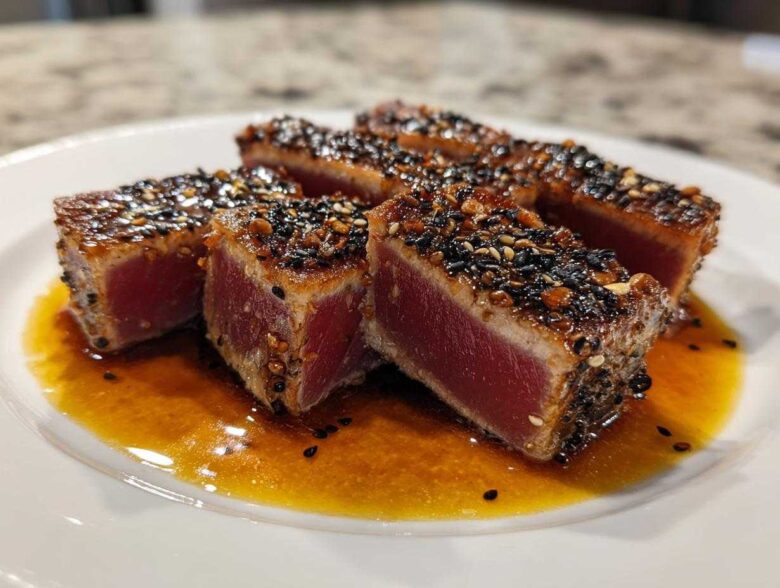
If you think truly restaurant-quality fish is something reserved for expensive evenings out, let me stop you right there! I used to think cooking fish perfectly was some kind of dark art, something I’d mess up every time. But once I cracked the code on cooking a proper tuna steak, weeknight cooking totally changed for me. Seriously, this Pan-Seared Tuna Steak recipe is my ace in the hole when I need something impressive on the table in about ten minutes flat.
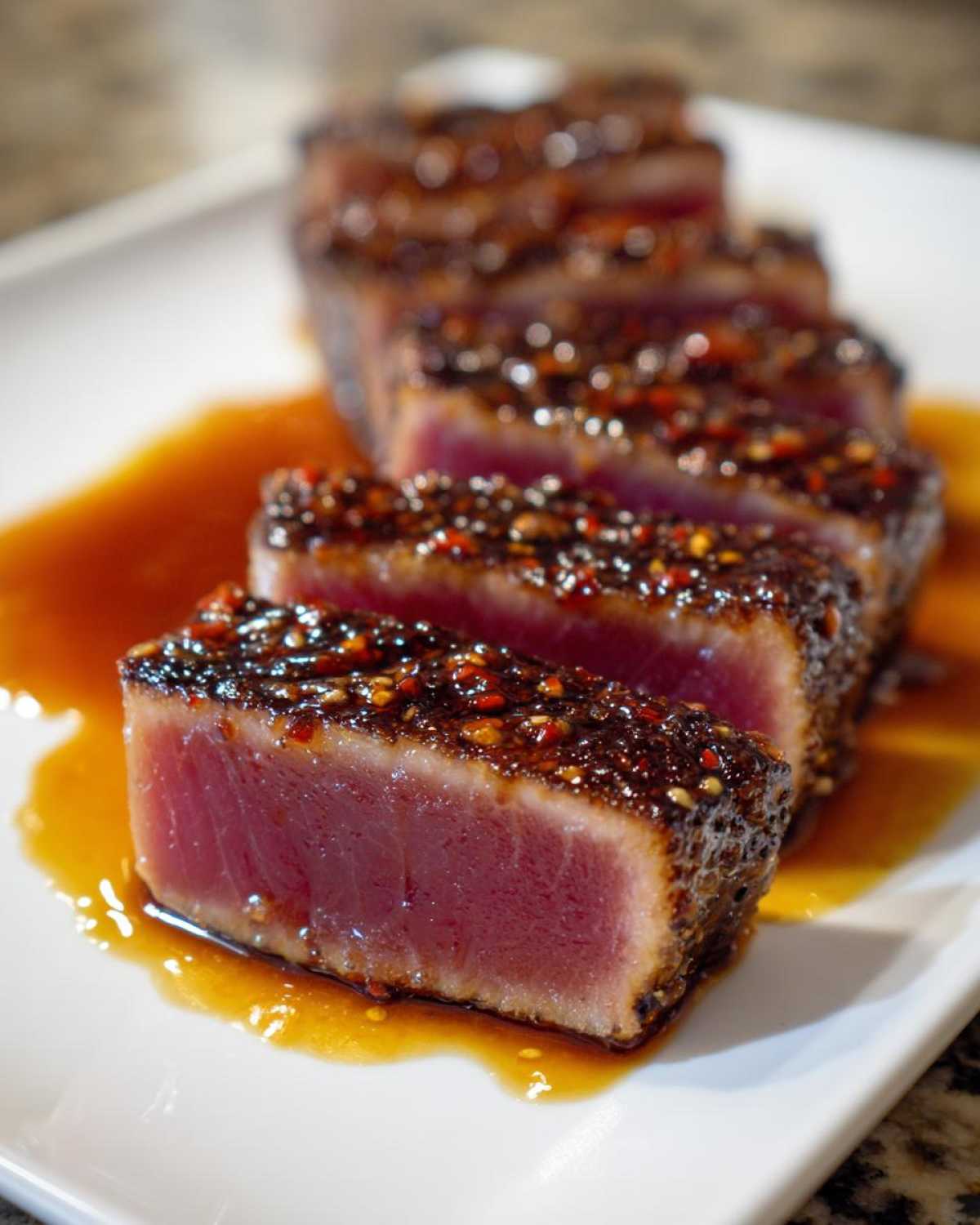
The real magic here is achieving that beautifully dark, crisp sear on the outside while keeping the center rosy pink—think barely cooked, tender, and juicy. We’re going to nail that perfect texture every single time using just a screaming hot cast iron pan and a super simple soy-ginger glaze we mix up while the pan heats up. Trust me, once you master this timing, you’ll be whipping up this healthy, ridiculously flavorful seafood steak like a pro!
Why This Pan-Seared Tuna Steak Recipe Delivers Restaurant Quality
What makes this approach different from just throwing fish in a pan? It’s all about prioritizing texture and speed. I know what you want—a gorgeous crust, an inside that feels like butter, and dinner ready before the kids finish complaining about homework. This recipe gives you exactly that!
- It offers incredibly satisfying flavor thanks to that punchy soy-ginger glaze we brush on at the end.
- It’s high in protein and feels much lighter than a heavy sauce, but it eats like a splurge.
- Most importantly, you get an authentic, perfectly seared tuna steak every single time.
Achieving the Perfect Sear on Your Tuna Steak
The secret sauce to a great sear isn’t the seasoning—it’s physics! You absolutely must have your cast iron pan scorching hot before you introduce any oil. When the tuna hits that heat, the moisture on the surface instantly turns to steam and blasts away. That quick evaporation is what sets up that dark, crispy crust we’re craving. Remember, a dry surface creates a crust; a wet surface just steams the fish.
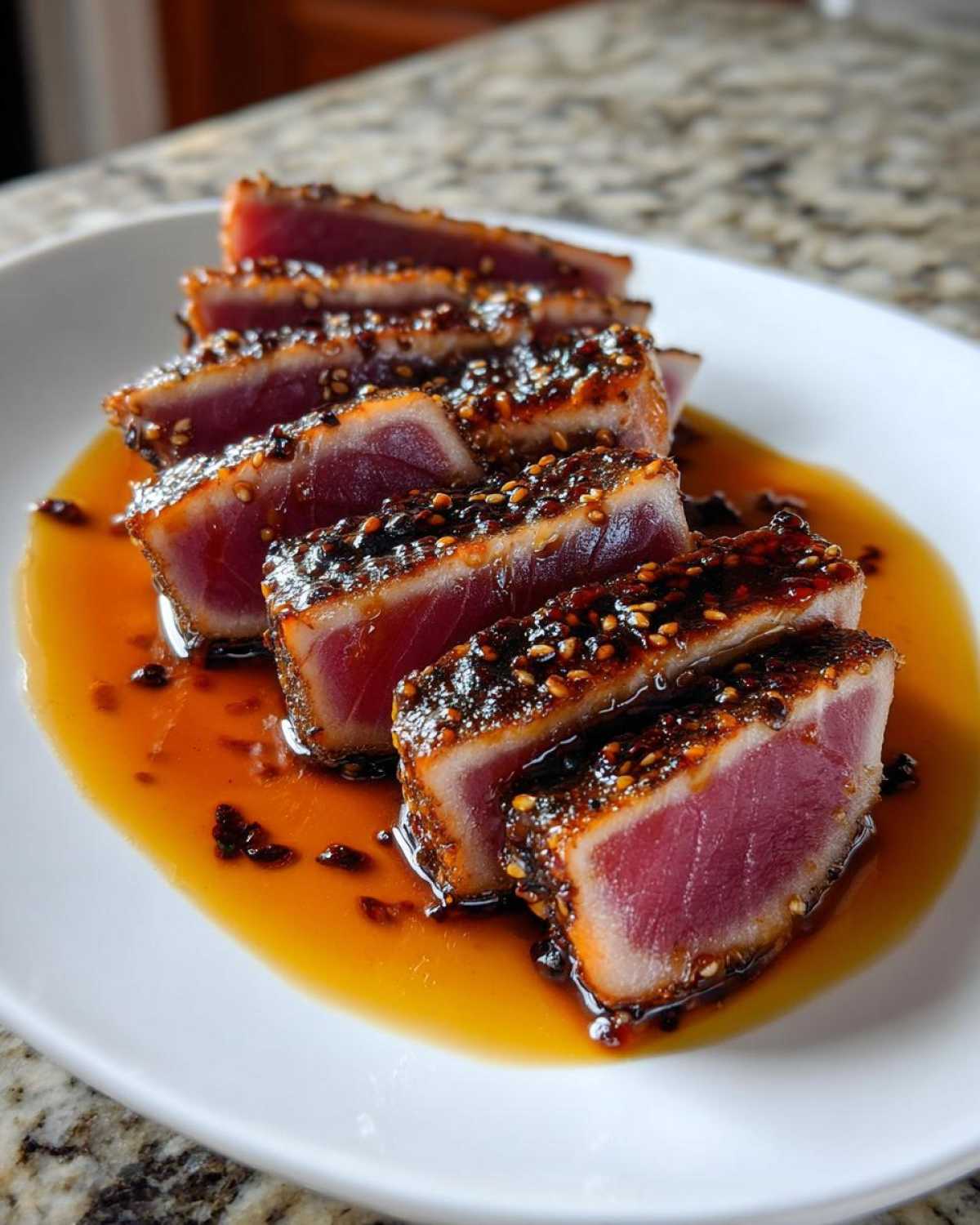
Speed: A True 10 Minute Tuna Steak Dinner
We aren’t hanging around the stove for 30 minutes, not today! Between mixing the glaze (which takes ninety seconds) and the actual searing time—which is maybe four minutes total for rare—you genuinely have dinner done in 10 minutes or less. This makes it perfect for those evenings when you realize at 6:15 PM that nobody has made dinner yet. It’s the ultimate 10 minute tuna recipe I rely on when I’m exhausted!
Essential Ingredients for Your Tuna Steak Recipe
Okay, let’s talk about what you actually need here. Because this dish is so fast, every single ingredient really gets a moment to shine, so don’t try to skimp or substitute the basics! If you want that beautiful, flaky final product, you have to start with quality. You’ll need two six-ounce tuna steak pieces, and here’s a huge tip: make sure they are about an inch thick. Thin pieces cook way too fast and you’ll never get that sear!
For searing, just a tablespoon of basic vegetable oil is perfect because it has a high smoke point—we need that heat! The glaze is where the fun starts, so grab your soy sauce, a little rice vinegar for zing, fresh ginger (don’t use the powder, please!), honey for sweetness, and one single clove of garlic, minced up nice and small. And for the finish, don’t forget the tablespoon of butter; that’s what brings it all together in the pan just before serving. Salt and pepper are your usual suspects, naturally.
How to Cook Tuna Steak: Step-by-Step Pan-Searing Instructions
Look, if you follow these easy steps for how to cook tuna steak, you’ll never end up with dry, sad fish again. The key to this entire process is moving quickly and decisively once the heat is on. We’re focusing on that beautiful rare center, which means time management is super important here—total cook time is maybe four minutes!
Preparing the Soy-Ginger Glaze and Steaks
First thing first, let’s get the glaze ready so it’s waiting patiently. In a small bowl, you’ll just whisk together the soy sauce, the vinegar, the grated ginger, that little bit of honey, and the minced garlic clove. Whisk it up and set it aside. Now, the most important thing for developing that crust on your tuna steak? You have to pat those steaks completely dry with paper towels. I mean bone dry! Once they’re dry, hit them with a little salt and pepper.
The High-Heat Sear for Perfectly Seared Tuna
Take your cast iron skillet—yes, the heavy one—and get it smoking hot over high heat. Add the oil and wait until it just starts to shimmer. Now, carefully lay the tuna steaks down away from you; remember, high heat means potential splatter! For that amazing rare center, you only sear 1.5 to 2 minutes per side. Don’t be tempted to touch them until that time is up! That’s how you get that incredible crust we talked about. For medium, add maybe another minute per side, but honestly, raw in the middle is the way to go when we’re talking about quality ahi tuna cooking tips.
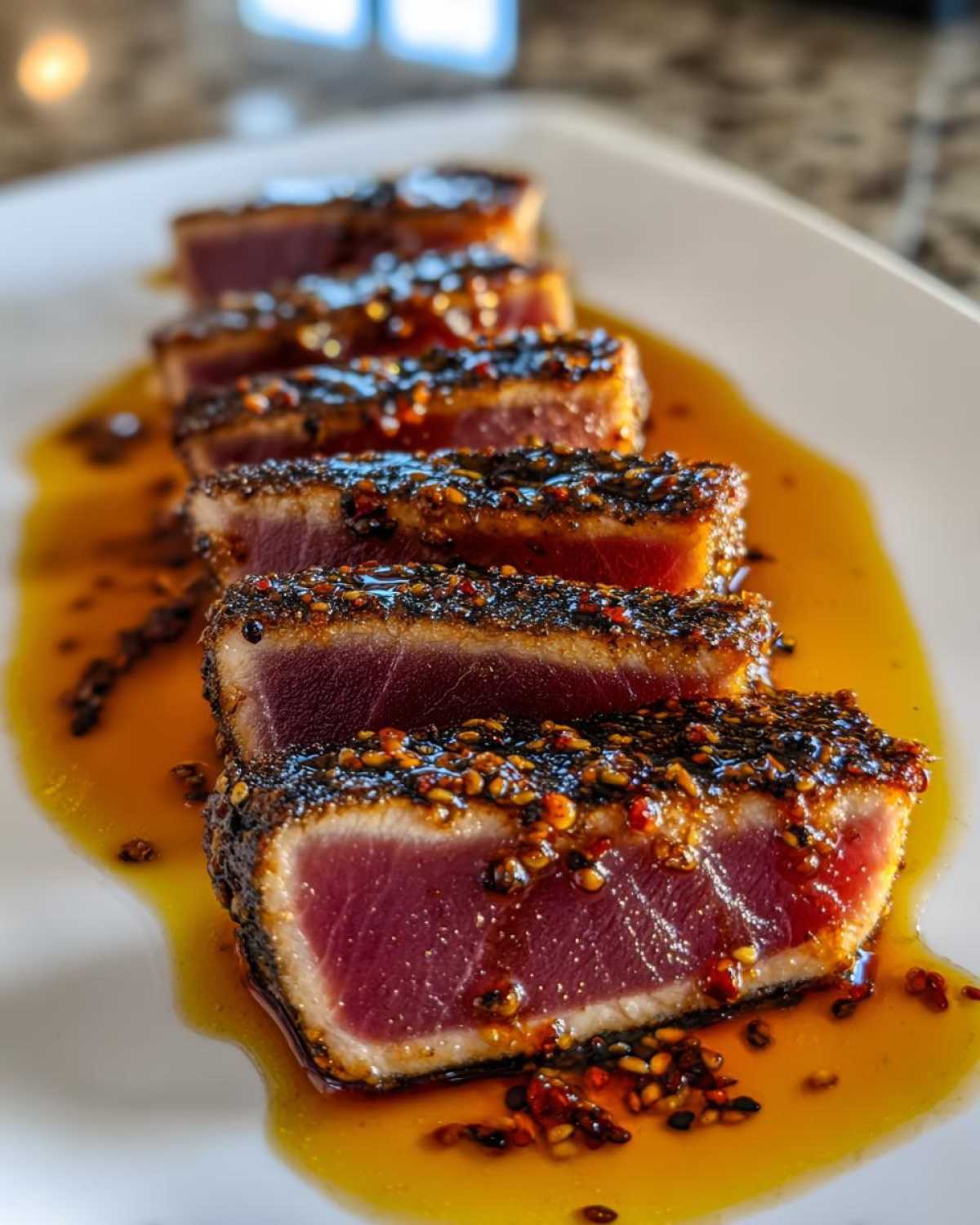
Finishing the Tuna Steak with Garlic Butter
As soon as you flip the steaks for the last time, you need to be ready. When the total searing time is done, you must immediately take the skillet OFF the heat source. This step is vital! It stops the searing immediately. Toss in your tablespoon of butter right into that hot, empty pan. Then, pour that reserved soy-ginger glaze right over the sizzling butter. It will bubble up instantly. Use a spoon to quickly baste that melted butter and sauce all over the tuna steaks a bunch of times. Then, pull them out right away, let them rest for two minutes, slice against the grain, and devour!
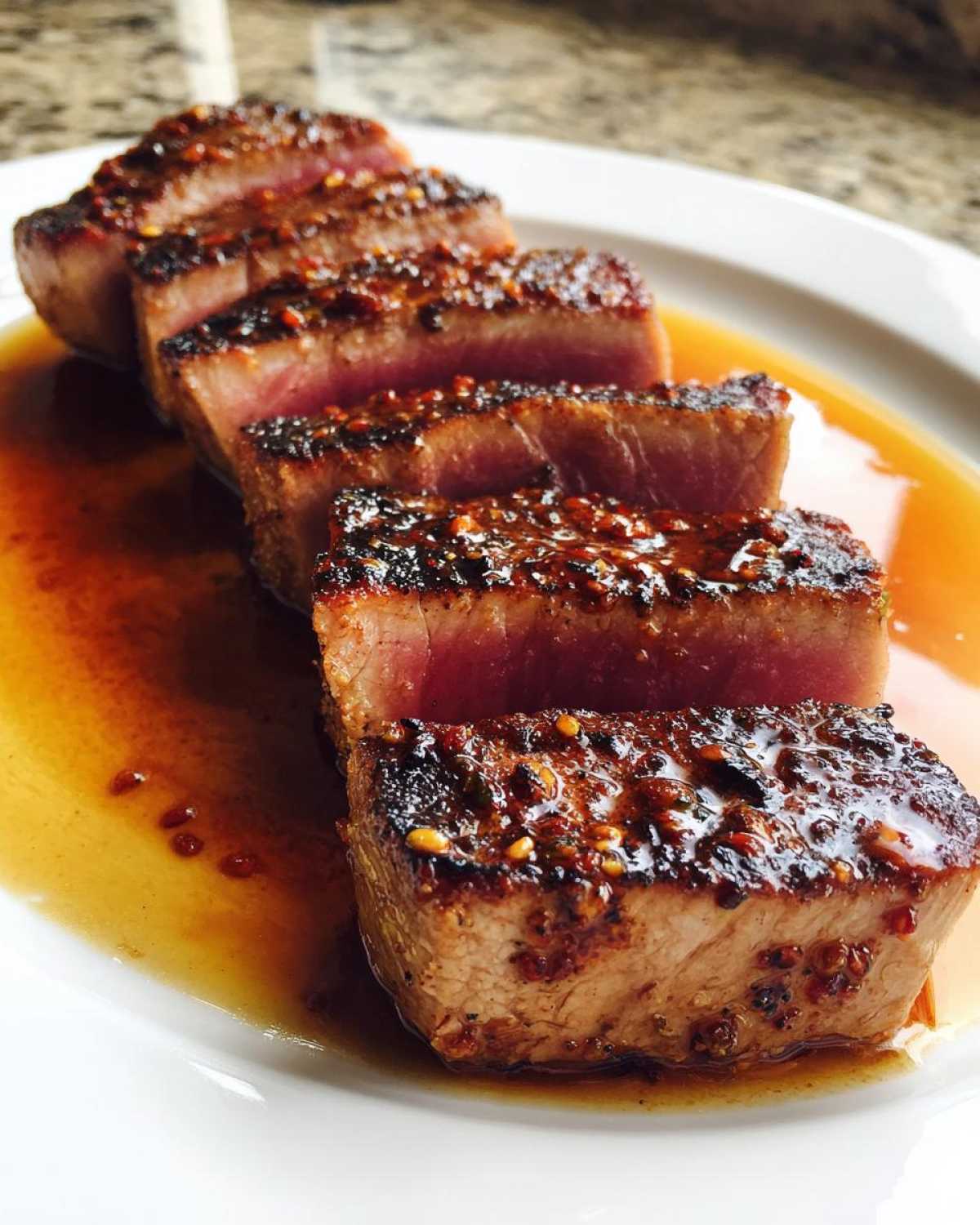
Tips for Achieving Restaurant Quality Tuna Steak Every Time
Getting that gorgeous, deep sear on your tuna steak isn’t just about luck; it’s about respecting the heat and the fish itself. If you want that elusive, melt-in-your-mouth tender center, there are a few rules I always stick to. Honestly, treating it more like a beef steak than a delicate white fish is the first big mindset shift you need to make!
First, let’s talk sourcing. I know I mentioned it, but I can’t stress this enough: if you plan to eat your tuna rare—and why wouldn’t you?—you must use sushi-grade or sashimi-grade tuna. This isn’t being fussy; it’s about safety and texture when you’re aiming for any kind of restaurant quality tuna experience at home. The quality of the raw product makes all the difference when the cook time is so short.
Second, pay attention to timing and temperature. Don’t mess with medium heat; we need high heat, and we need it fast. If you start to smell the oil before you put the fish in, you’re probably too late! Remember my flip rule: 90 seconds to two minutes max per side for rare. Any longer, and you’ve lost that beautiful contrast between the seared crust and the cool, tender interior of your tuna steak.
Flavor Variations: Beyond Soy Ginger Tuna Steak
While the soy-ginger glaze is my go-to because it’s so clean and bright on a good tuna steak, I totally get that you might want something different next Tuesday! The beauty of quick searing is that the base technique works brilliantly with almost any robust flavor profile. You don’t even need a separate marinade time before you start cooking if you use a dry rub!
If you’re craving something smoky and spicy, you can completely ditch the glaze mixture and swap in your favorite blackened seasoning. That’s my recommendation when I’m in the mood for something bolder!
Making a Blackened Tuna Steak
This substitution is so easy. Instead of seasoning the raw tuna steak just with salt and pepper, liberally coat both sides with a Cajun or blackening spice blend. You still want that super hot pan with oil—high heat is non-negotiable for the blackening crust! Sear it exactly as directed, 1.5 to 2 minutes per side. When you remove it from the heat and add the butter? Instead of pouring on the glaze, just swirl that melting butter around and spoon the fragrant, herby butter over the top. It’s rich, spicy, and still done in five minutes!
Serving Suggestions for Your Quick Seafood Dinner Ideas
After all that high-heat cooking to get your tuna steak ready, you don’t want to hang around making complicated sides, right? Since we went with that bright soy-ginger flavor, we need sides that match that lightness. I always keep things super simple here.
My absolute favorite pairing is a quick bowl of sushi rice—you can buy the pre-steamed packets that microwave in two minutes, seriously! That soaks up all that delicious garlic butter glaze perfectly. If you want something green and crunchy, toss together a simple slaw using shredded cabbage, a splash of rice vinegar, and some sesame oil. That’s it! You’ve got a healthy, high-protein seafood dinner on the table faster than ordering takeout!
Storage and Reheating Instructions for Leftover Tuna Steak
If you’re lucky enough to have any of this gorgeous pan-seared tuna steak leftover—which is rare in my house, if I’m honest—storage is pretty straightforward. But here’s the big warning right up front: if you cooked it rare (which you should have!), you’re not going to want to reheat it much at all.
Once the fish cools down, that exterior sear starts to soften, and that beautiful pink center immediately starts to cook through due to residual heat trapped inside. If you try to reheat a rare or medium-rare steak, you’re basically just going to steam it until it’s well-done and boring. So, my number one rule for leftovers is: Plan to eat it cold!
Store any cooked tuna in an airtight container in the fridge, and try to use it up within a day, maybe two at the absolute max. When you pull it out, it’s fantastic cold, sliced thinly over a big salad or added right into that quick slaw I mentioned earlier. It keeps the protein high and the texture miles better than trying to zap it in the microwave.
If you absolutely *must* reheat it—say, you cooked it medium to begin with—use the lightest possible heat source. A quick 15-second blast in the microwave, or better yet, just slice it thin and warm the slices very gently in a dry, non-stick pan over the lowest possible heat for maybe 30 seconds total. But honestly? Just eat it cold. It’s so much better for your tuna steak dinner experience!
Frequently Asked Questions About Tuna Steak
I get so many questions about this recipe, which makes total sense! People are often nervous about cooking fish this fast, especially when they want that perfect pink center. If you’ve mastered this pan-seared version, you’re halfway to mastering everything else. Here are some of the things I get asked most often about enjoying the perfect tuna steak.
What is the best cut of tuna steak to buy?
Hands down, you want an Ahi tuna steak, which is Yellowfin. The key word you need to look for in the store is “sushi-grade” or “sashimi-grade.” This means it was handled with the intention of being eaten raw or very rare. If it’s not labeled that way, I’d advise cooking it longer than my recipe suggests until it’s done all the way through. Aim for about an inch thick—it’s the easiest way to get that perfectly seared tuna look!
What internal temperature should my tuna steak be?
This depends entirely on how you like it, but for this recipe, we are aiming for rare! Rare tuna should register around 115°F (46°C) after it rests. Medium-rare is about 125°F (52°C). Honestly, if you’re using a meat thermometer, it’s totally cheating, but it works! For me, the visual cue works best: it should be just barely opaque pink in the center, not gray.
Can I use my grill instead of the cast iron skillet?
Absolutely! If you’re ready to try grilled tuna steaks, the principle is exactly the same: get your grill grates super, super hot. You might want to apply a thin coat of oil to the grates before placing the seasoned fish down. Grill them for about 2 minutes per side for that rare temperature. Just make sure your grill grates are clean so you don’t stick!
Is this considered a healthy fish recipe?
It totally is! Tuna is famous for being one of the best high protein seafood options out there. Since we aren’t drowning it in heavy cream or frying it, this recipe is naturally low in fat and carbs. The minimal oil and the glaze make it a super clean, incredibly fast easy tuna dinner!
Understanding the Nutritional Profile of This High Protein Seafood Meal
One of the best things about relying on something like a tuna steak recipe for a quick meal? It’s practically guilt-free! This kind of fish is just packed with goodness. When you’re looking for a fast, flavorful alternative to chicken or beef, this is honestly the way to go. It fills you up fast because it’s such a powerhouse of lean protein.
I pulled together the estimated nutrition breakdown so you can see exactly what you’re getting when you eat one of these gorgeous, seared steaks. Just remember, these numbers are an estimate because the exact makeup of your tuna steak can vary a little bit depending on the brand and how much of that delicious, buttery glaze you spoon over the top!
Here’s what you can typically expect from one serving of this incredible healthy fish recipe:
- Calories: About 250 (Wow!)
- Protein: A whopping 35 grams! That’s why this is such a fantastic high protein seafood option.
- Fat: Roughly 10 grams total, mostly healthy unsaturated fats.
- Sugar: Super low, usually around 3 grams, coming mostly from that tiny bit of honey in the glaze.
- Sodium: This one is slightly higher because of the soy sauce (around 350mg), so if you’re watching your salt, just use low-sodium soy sauce!
See? It’s proof that you can have an incredibly satisfying, rich-tasting meal without packing in a ton of unnecessary carbs or saturated fats. Happy eating!
PrintPan-Seared Tuna Steaks with Soy-Ginger Glaze
Cook tuna steaks quickly using the pan-searing method to achieve a crisp exterior and a rare, tender center, finished with a simple soy-ginger glaze.
- Prep Time: 5 min
- Cook Time: 5 min
- Total Time: 10 min
- Yield: 2 servings
- Category: Dinner
- Method: Pan-Searing
- Cuisine: Asian Inspired
- Diet: Low Fat
Ingredients
- 2 (6 ounce) tuna steaks, about 1 inch thick
- 1 tablespoon vegetable oil
- 1 tablespoon soy sauce
- 1 tablespoon rice vinegar
- 1 teaspoon grated fresh ginger
- 1 teaspoon honey or brown sugar
- 1 clove garlic, minced
- 1 tablespoon butter
- Salt and black pepper to taste
Instructions
- Pat the tuna steaks completely dry with paper towels. Season both sides lightly with salt and pepper.
- In a small bowl, whisk together the soy sauce, rice vinegar, ginger, honey, and minced garlic to create the glaze. Set aside.
- Heat the vegetable oil in a cast iron or heavy-bottomed skillet over high heat until the oil shimmers.
- Carefully place the tuna steaks in the hot skillet. Sear for 1.5 to 2 minutes per side for rare (or longer if you prefer more done). You want a dark crust.
- Remove the skillet from the heat. Add the butter to the skillet.
- Pour the reserved soy-ginger glaze mixture into the skillet. The butter will melt and the sauce will bubble quickly.
- Spoon the melted butter and glaze mixture over the tuna steaks several times as the residual heat finishes the cooking process.
- Remove the tuna steaks from the pan immediately and let them rest for 2 minutes before slicing against the grain.
Notes
- For a perfect sear, make sure your pan is very hot before adding the oil and steaks.
- If you prefer a different flavor, substitute the glaze ingredients with Cajun seasoning for a blackened crust.
- Use sushi-grade or sashimi-grade tuna for the best texture when cooking rare.
Nutrition
- Serving Size: 1 steak
- Calories: 250
- Sugar: 3
- Sodium: 350
- Fat: 10
- Saturated Fat: 4
- Unsaturated Fat: 6
- Trans Fat: 0
- Carbohydrates: 5
- Fiber: 0
- Protein: 35
- Cholesterol: 75
