

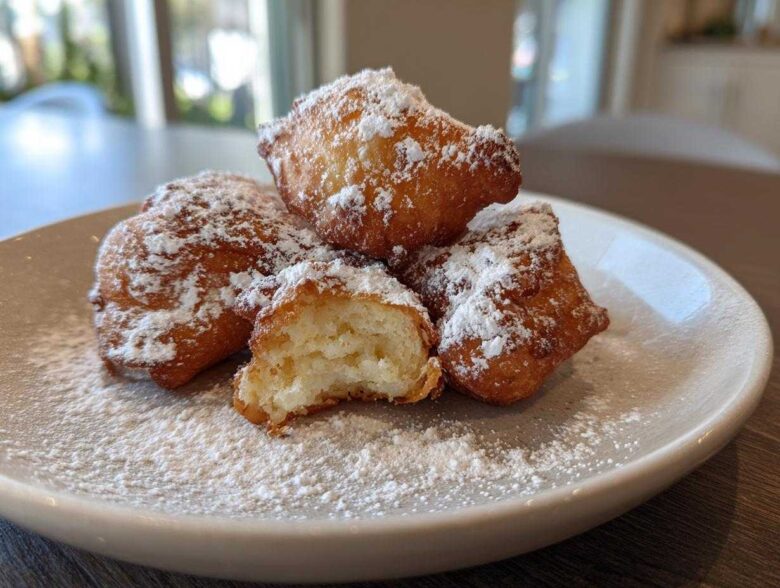
Oh, listen, if you’ve ever walked past a bakery window and smelled that sweet, yeasty cloud of fried dough, you know the feeling I’m talking about. Nothing beats a perfect, freshly fried pastry, and trust me, making Vanilla French Beignets at home is not nearly as scary as folks make it sound! Forget dense, heavy doughnuts; our goal here is that beautiful, airy puff—the kind that explodes with steam when you bite into it.
The secret to that signature lightness comes down to our yeast work and, of course, that beautiful hint of vanilla that elevates them beyond the ordinary. Seriously, these little squares are heavenly when they are hot out of the oil. I’ve spent years tweaking this recipe until I got that authentic, melt-in-your-mouth texture. You just wait until you see them balloon up in the fryer—it’s pure magic, I promise you!
We’re also using a simple technique that ensures they stay light, not oily. Pop over to my guide on making easy French toast if you need a quick pick-me-up while the dough rises, because patience is the only hard part of this entire process. Let’s get mixing!
Why You Will Love This Authentic French Beignet Recipe
Honestly, once you master these, you’ll never go back to store-bought. These aren’t just decent fried squares; they are genuinely light as air! Here’s exactly why this recipe has become my go-to:
- They boast that incredible, cloud-like interior texture that is so hard to find outside of New Orleans or a specialty French patisserie.
- We infuse the dough with pure vanilla extract, giving you a subtle, warm flavor that pairs perfectly with a heavy dusting of powdered sugar.
- The dough preparation is actually very straightforward—no complicated folding or resting times slowing you down too much.
- You learn the trick to frying pastry dough perfectly, ensuring they puff up beautifully without becoming greasy messes.
- It’s a yeast doughnut from scratch that feels fancy but comes together faster than you think!
- They are absolutely best when eaten piping hot, encouraging everyone to gather around the kitchen while you work.
- If you want the detailed texture breakdown, check out my deep dive on how to achieve the best homemade beignet texture later!
Ingredients for Perfect Vanilla French Beignets
The beauty of these Homemade Vanilla Doughnuts lies in their simplicity. We aren’t overloading the dough with butter; we rely on the yeast and the vanilla for personality. You’ll need basic pantry staples, but pay attention to the milk temperature—that’s critical for wake-up call to your yeast.
Here’s the short list we need for about 16 glorious squares. If you want to swap out the vanilla extract for my absolute favorite vanilla bean paste (which gives you those lovely little black specks!), feel free. For more ideas on using quality vanilla, check out my recipe for moist fluffy vanilla cake.
- 1 cup warm milk (it must be right around 110°F, no hotter!)
- 2 1/4 teaspoons active dry yeast
- 1/4 cup granulated sugar
- 1 large egg, room temperature is best
- 1 teaspoon good quality vanilla extract
- 1/2 teaspoon salt
- 3 cups all-purpose flour, plus extra for dusting
- Vegetable oil, plenty of it, for deep frying
- Powdered sugar, a mountain of it, for the final dusting
Step-by-Step Instructions for Vanilla French Beignets
Okay, here’s where the magic happens! Don’t rush this part. If you follow these steps exactly, you’re going to have impossibly airy pastries. We’re working with yeast here, so pay attention to the little cues the dough gives you. For related advice on working with yeast doughs, take a peek at my guide on easy homemade French bread!
Mixing and Kneading the Puff Dough Recipe
First things first: wake up that yeast! Pour your warm milk—and I mean warm, about bathwater temperature, around 110°F—into a big bowl and sprinkle the yeast right on top. Let it chill out for about five minutes until it gets all foamy and happy. That tells you it’s alive and ready to work! Next, whisk in your sugar, the egg, the salt, and that beautiful vanilla extract. Now, slowly start adding your flour, a cup at a time, until everything just comes together into a shaggy-looking mass. Don’t worry, it’s supposed to be soft! Turn that dough out onto a lightly floured counter and knead it. You need about 5 to 7 minutes of good, steady work until the dough feels smooth and elastic under your hands. Give it a poke; it should spring back slowly.
The Crucial Rise Time for Light and Fluffy Fried Pastries
Time for a nap! Lightly oil a clean bowl, drop your kneaded dough in there, and roll it around so it gets a little coat of oil—this stops it from drying out. Cover that bowl up tight with plastic wrap, and find the warmest spot in your kitchen. Seriously, a warm spot helps those little yeast buddies get energized! Let it ride for 1 to 1.5 hours. You’re aiming for it to completely double in size. If it seems slow, just know that this long, slow rise is what guarantees those Light and Fluffy Fried Pastries you’re dreaming about!
Frying Pastry Dough Perfectly to Achieve Golden Squares
When it’s puffed up, gently punch it down—not too aggressively, or you knock all that lovely air out! On a lightly floured surface, roll that dough out. You want it about 1/4 inch thick; any thinner and it won’t puff right, too thick and it stays gummy inside. Cut out your 3-inch squares. Now, the most important step for Frying pastry dough perfectly: heat about two inches of vegetable oil in a heavy pot up to exactly 375°F. You have to use a thermometer here; if the oil is too cool, they soak up grease. If it’s too hot, they burn instantly. Drop in just 3 or 4 squares at a time so you don’t drop the temperature! Fry them for just one or two minutes per side until they puff up wildly and turn golden brown. Scoop them out with a slotted spoon and let them rest on paper towels to drain.
Tips for Success Making Your Vanilla French Beignets
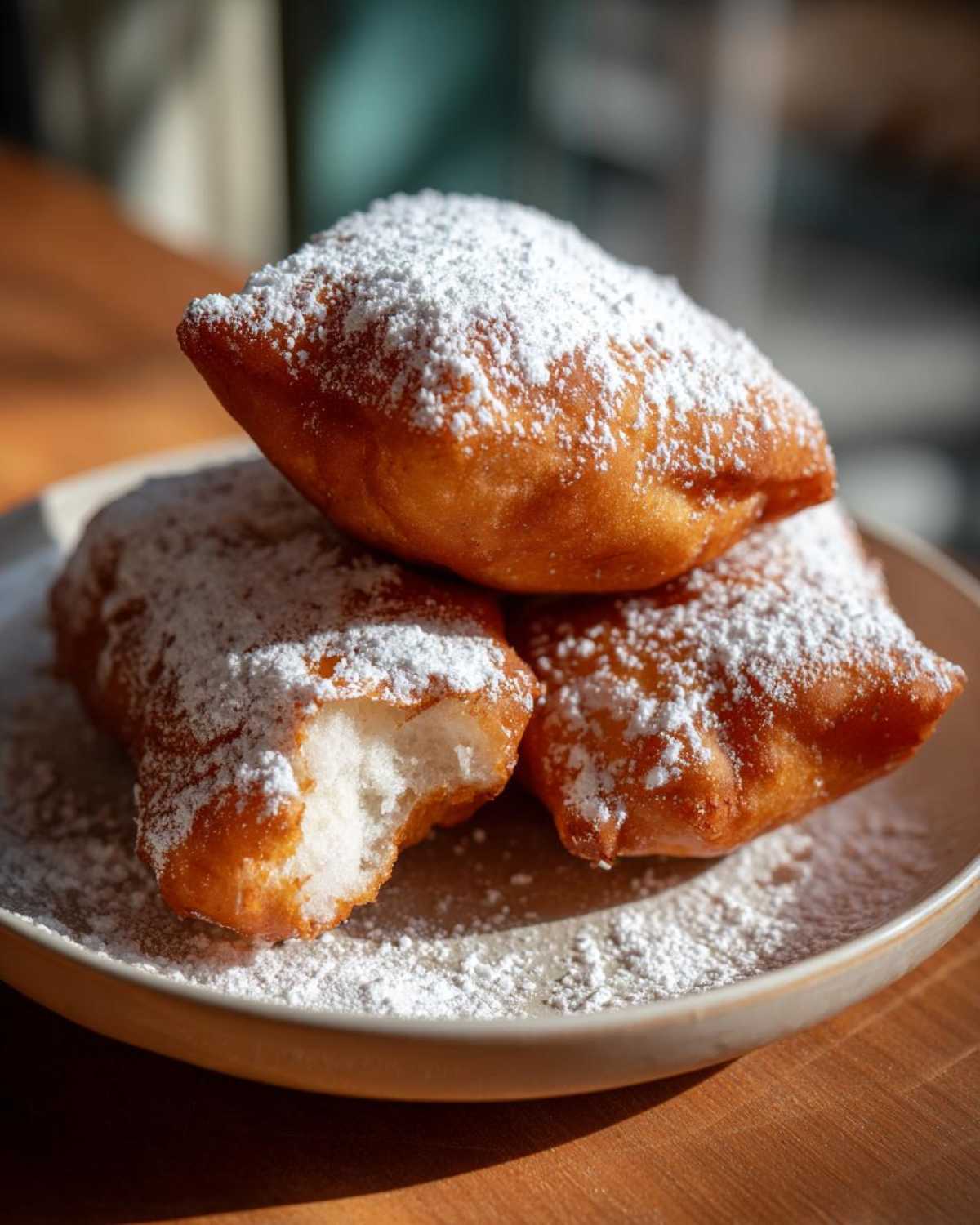
Look, I know frying can intimidate people, but I promise, sticking to just two things makes these Vanilla French Beignets unbeatable. First, that oil temperature. If you let it dip below 360°F, they get heavy, and that’s a tragedy. Keep that thermometer glued to the side of your pot! Second, about that vanilla flavor—if you really want them to sing, switch out the extract for vanilla bean paste. Wow. The specks look beautiful, and the depth of flavor is incredible.
Also, don’t be greedy when you cut them. Keep those squares or circles small, about 3 inches is perfect. Overcrowding the pot is the fastest way to ruin the oil temperature and end up with sad, pale, oily pastries instead of beautiful puffballs. If you’re looking for a really intense vanilla experience, you could even try making a batch of my famous vanilla buttercream frosting and using that as a dramatic drizzle instead of just sugar!
Ingredient Notes and Vanilla French Beignets Substitutions
So, you might be looking at that list and wondering if you can swap things out. Mostly, yes, but let’s talk specifics, especially when it comes to capturing that deep, luxurious flavor for your Vanilla French Beignets. I mentioned vanilla paste earlier, and trust me, if you’re making these for a special brunch, splurge on it! It gives you that intense vanilla punch that the extract can’t quite match.
When it comes to oil, I stick to a high-smoke-point neutral oil like vegetable or refined peanut oil. Don’t try olive oil or anything strongly flavored; we want the yeast and vanilla to shine! You need at least two inches depth so the dough has room to swim and puff freely.
Now, about that dusting sugar versus a glaze. Grandma always insisted on just powdered sugar for her Sweet Fried Dough, and usually, that’s enough when the dough is flavored well. But if you need something richer? You can whip up a simple glaze! Just take a cup of powdered sugar, thin it out with about two tablespoons of milk, and stir in half a teaspoon of vanilla extract. Drizzle it on once the beignets have cooled slightly. It hardens beautifully! For something brighter, perhaps consider looking at how I incorporate citrus in my orange almond biscotti—you could add a tiny bit of lemon zest to that glaze for a twist!
Serving Suggestions for Classic French Carnival Sweets
Once these beautiful **Vanilla French Beignets** are out of the oil and sitting on the rack draining, the real fun begins—the dusting! You need a generous hand here. Don’t be shy with the powdered sugar. Seriously, pile it high! This isn’t just decoration; the fine powder helps absorb any residual surface oil and gives you that classic look.
The best way to dust them is to place the warm beignets directly into a large paper bag with a half-cup of powdered sugar, seal the top, and give it a good shake. This ensures every nook and cranny gets coated. This is the essence of serving up simple **Sweet Fried Dough Dusting Sugar** style.
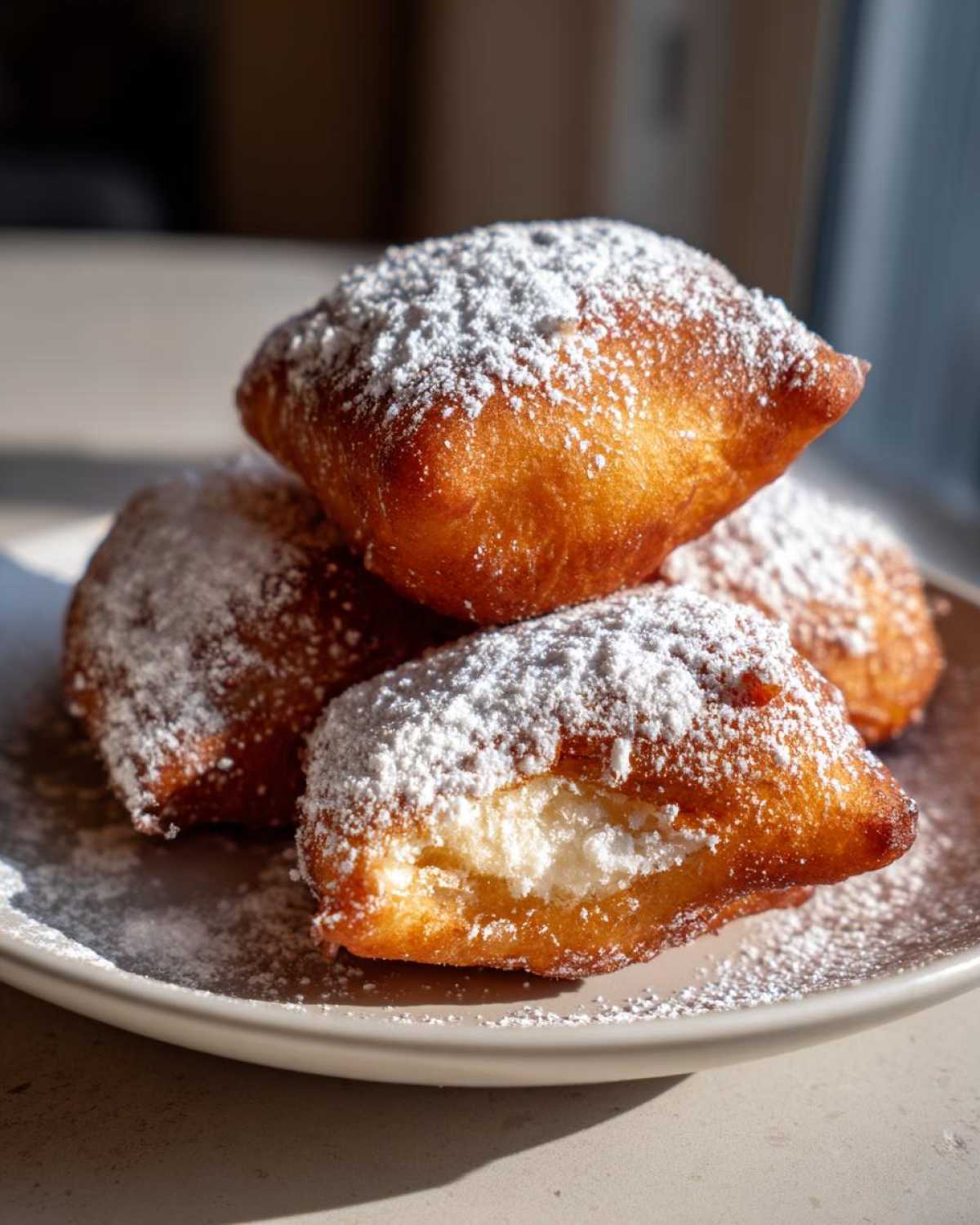
As for what to serve them with? You simply must go traditional. A strong, dark cup of coffee is perfect alongside these airy treats. If you want to lean into the slightly vanilla, sweet profile we created in the dough, you have to try serving them with a nice, milky café au lait. For a real treat, whip up a batch of my caramel brown sugar latte; the warm spice blends perfectly with the fried dough. They disappear fast, so make extra coffee!
Storage and Reheating Instructions for Homemade Vanilla Doughnuts
I’m going to be totally honest with you: these Homemade Vanilla Doughnuts are at their absolute peak glory about three minutes after they come out of the oil. Nothing beats that initial puff and steam! If you manage to have any leftovers—which, in my house, is a true miracle—you have to handle them gently.
Never, ever put fried dough in the refrigerator. Seriously, don’t do it! That cold air just sucks the air right out of them, and they turn into sad, greasy hockey pucks. If you must save them for the next day, put them in a truly airtight container at room temperature. I usually try to eat them within 12 hours, tops.
Now, how do we bring yesterday’s beauties back to life? My microwave is banned from touching beignets—it instantly makes them chewy. Instead, you want to add a little gentle heat. The best method is a quick trip in the oven or, if you have one, your countertop air fryer. Set your oven to about 325°F, lay the beignets on a wire rack set over a sheet pan, and warm them for just 3 to 5 minutes. They’ll crisp up slightly on the outside, and the inside gets soft again! If you’re feeling ambitious with leftovers, you can even chop them up and soak them in custard for an amazing bread pudding recipe!
Frequently Asked Questions About Vanilla French Beignets
I get so many messages about these little fried clouds! You’ve mastered the dough, but sometimes the frying part feels like walking a tightrope. Don’t worry, we’ve all been there. Let’s clear up a few things so you can nail that perfect texture every single time you make these Yeast Doughnuts from Scratch.
What is the difference between these and New Orleans Style Beignets?
That’s a great question! Our recipe here leans toward the traditional, lighter French style, which often relies on milk and relies heavily on that yeast rise for puffiness. New Orleans Style Beignets usually incorporate egg yolks into the dough. Those yolks add a little richness and a slightly more golden color to the finished product, and sometimes they use a bit more sugar in the actual dough. Honestly, both are divine, but ours are designed to be light enough to serve with your morning coffee!
How can I guarantee the best homemade beignet texture?
If you want that **Best Homemade Beignet Texture**, it comes down to two major checkpoints. First, make sure your yeast is absolutely fresh and that your milk is the right temperature—if the yeast isn’t happy, the dough won’t rise right, and you end up with dense little bricks. Second, remember what I said about the oil: 375°F, perfectly maintained! If the oil is too cool, you get heavy pastries because they soak up too much fat. Stick to those rules, and you are golden!
If you’re looking for other ways to perfect your breakfast game, check out my guide to making classic French toast—it uses similar principles of good mixing!
Estimated Nutritional Information for Vanilla French Beignets
Now, I know what you’re thinking. Fried dough, sugar, and pure happiness probably don’t exactly factor into a low-calorie diet, right? And you’re not wrong! These are a treat, a wonderful, delicious indulgence, and you should enjoy them unapologetically. My goal isn’t to turn these spectacular Vanilla French Beignets into health food—it’s to make them perfect and authentic!
The numbers below are just my best estimate per serving, based on the ingredients listed in the recipe. Please remember that this is just a guideline. If you use a different oil or pile on way more powdered sugar than I did in my test batch (which, honestly, I can’t blame you for!), the final count will shift. These homemade versions are *always* going to vary slightly from anything you’d buy out, which is part of the charm!
- Serving Size: 1 beignet
- Calories: 220
- Sugar: 10g
- Fat: 10g (mostly from the frying oil)
- Saturated Fat: 2g
- Carbohydrates: 30g
- Protein: 4g
- Cholesterol: 30mg
If you’re looking for recipe ideas or want to reach out with questions about the dough consistency or your frying setup, feel free to head over to my contact page! We can chat all things Homemade Vanilla Doughnuts there!
PrintVanilla French Beignets

A recipe for light, airy French beignets flavored with vanilla, deep-fried until golden, and dusted with powdered sugar.
- Prep Time: 20 min
- Cook Time: 15 min
- Total Time: 1 hour 50 min
- Yield: About 16 beignets
- Category: Dessert
- Method: Frying
- Cuisine: French
- Diet: Vegetarian
Ingredients
- 1 cup warm milk (about 110°F)
- 2 1/4 teaspoons active dry yeast
- 1/4 cup granulated sugar
- 1 large egg
- 1 teaspoon vanilla extract
- 1/2 teaspoon salt
- 3 cups all-purpose flour, plus more for dusting
- Vegetable oil, for frying
- Powdered sugar, for dusting
Instructions
- Combine the warm milk and yeast in a large bowl. Let stand for 5 minutes until foamy.
- Stir the granulated sugar, egg, vanilla extract, and salt into the yeast mixture.
- Gradually add the flour, mixing until a soft dough forms.
- Knead the dough on a lightly floured surface for 5 to 7 minutes until smooth and elastic.
- Place the dough in a lightly oiled bowl, turning to coat. Cover the bowl with plastic wrap and let it rise in a warm place for 1 to 1.5 hours, or until doubled in size.
- Punch down the risen dough gently. Roll the dough out on a lightly floured surface to about 1/4 inch thickness.
- Cut the dough into 3-inch squares.
- Heat 2 inches of vegetable oil in a deep, heavy-bottomed pot or Dutch oven to 375°F (190°C). Use a thermometer to maintain this temperature.
- Carefully drop 3 or 4 dough squares into the hot oil, ensuring not to overcrowd the pot.
- Fry for 1 to 2 minutes per side, turning once, until puffed and golden brown.
- Remove the beignets with a slotted spoon and place them on a wire rack lined with paper towels to drain excess oil.
- Dust generously with powdered sugar while still warm. Serve immediately.
Notes
- For a stronger vanilla flavor, use vanilla bean paste instead of extract.
- Maintain the oil temperature strictly at 375°F; if the oil is too cool, the beignets will absorb too much oil and become heavy.
- If you prefer a glaze, mix 1 cup powdered sugar with 2 tablespoons milk and 1/2 teaspoon vanilla extract, then drizzle over cooled beignets.
Nutrition
- Serving Size: 1 beignet
- Calories: 220
- Sugar: 10
- Sodium: 150
- Fat: 10
- Saturated Fat: 2
- Unsaturated Fat: 8
- Trans Fat: 0
- Carbohydrates: 30
- Fiber: 1
- Protein: 4
- Cholesterol: 30
